If you are looking for new treatment possibilities for a child with autism, you have probably run into a string of acronyms: tPCS, tDCS, rTMS, TPS. To a busy parent, they read like a maze. This article explains, in the simplest words, the one most worth understanding for Hong Kong families, transcranial pulsed current stimulation, what it is, how it works, and why it is worth your time.
1. It is not the "electric shock" you imagine
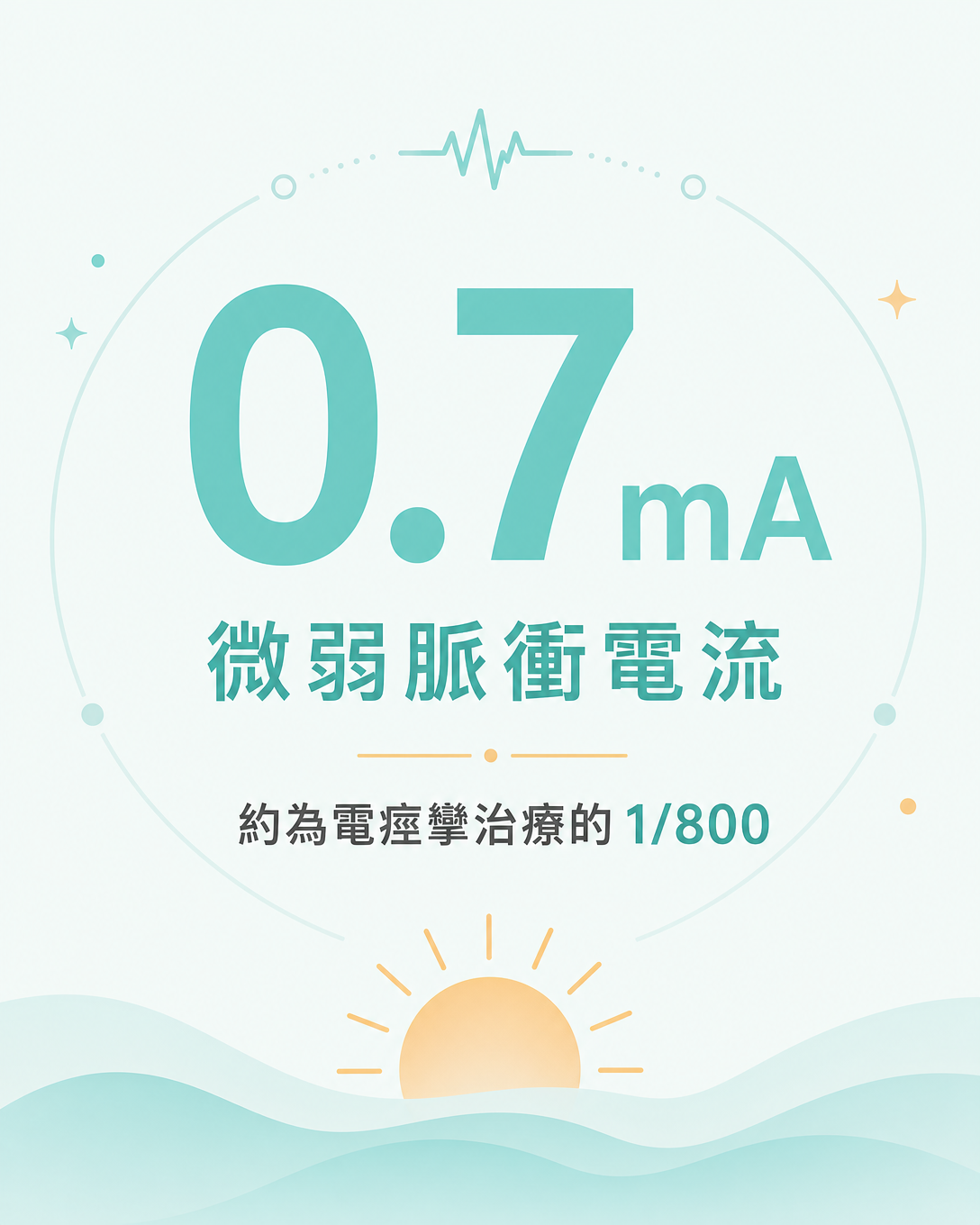
Hearing "electrical current stimulation," most parents' first reaction is fear. Let us be clear: this method uses an extremely weak current, generally under 2 mA, about one eight-hundredth of the energy used in electroconvulsive therapy1,2. The child is not "shocked." They only feel a faint, easily ignored sensation on the scalp. Each session lasts about twenty minutes with electrodes applied2.
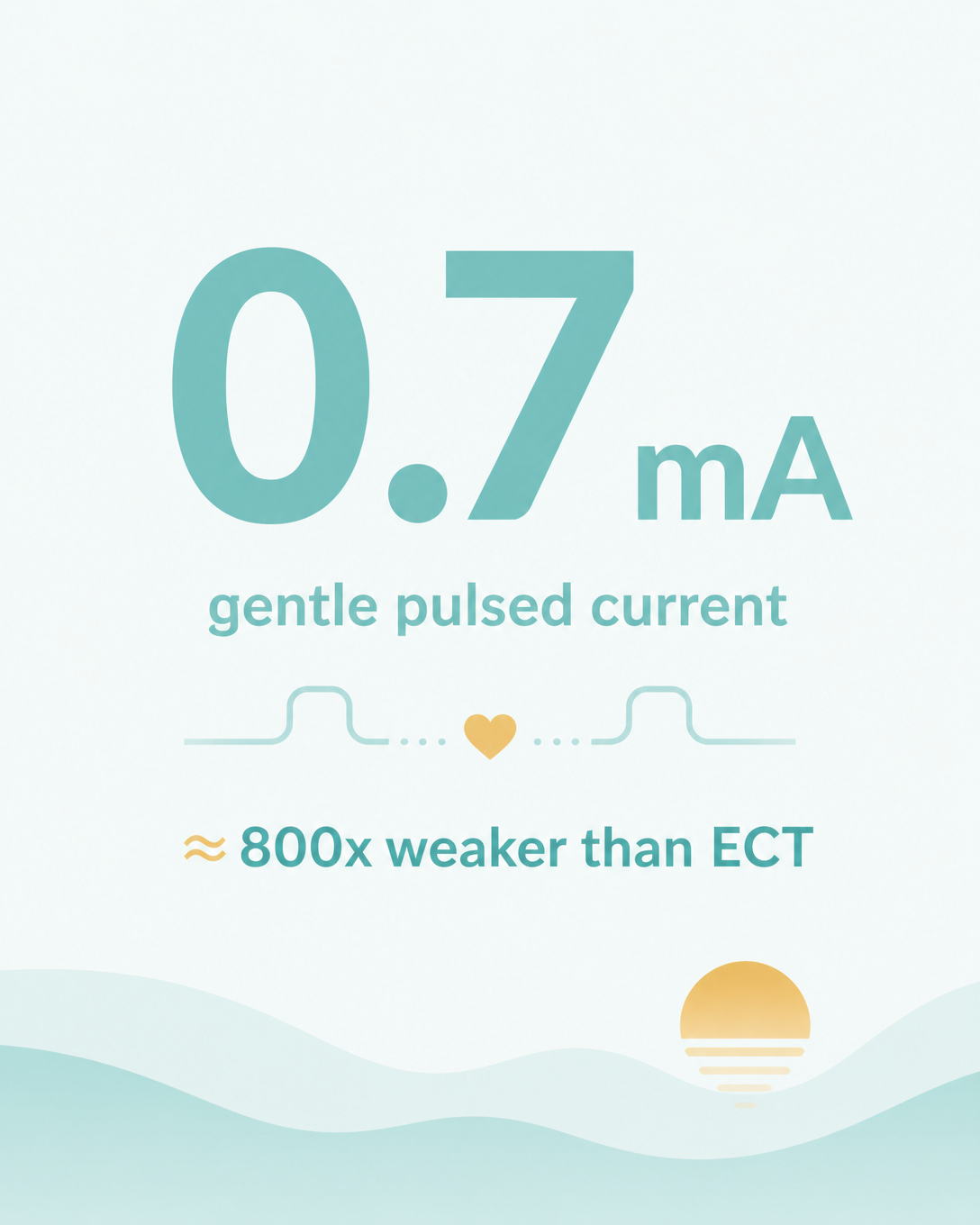
The current is about one eight-hundredth the strength of electroconvulsive therapy.
More importantly, it differs from traditional "direct current" stimulation: instead of flowing continuously, it sends current in "pulses," rhythmically, like a beat. That rhythm is what lets it speak to the brain's own rhythm1.
2. How it affects the brain: following the brain's own beat
The brain fires electrical rhythms all the time, and those rhythms are tied to focus, sleep, and social ability. Some of those rhythms are often different in autistic children1.
Pulsed current works by "following the brain's beat." It does not crudely switch a region "on" or "off." It gently helps disordered rhythms resynchronise, so signals flow more smoothly between brain regions1. Another explanation is "stochastic resonance": a whisper of pulsed stimulation can raise the brain's sensitivity to weak signals, so important information is more easily caught1.
Honestly, these remain hypotheses. A 2024 review states plainly that the full mechanism needs further study1. But the direction is clear: it tries to "tune" the brain, not "jolt" it.
3. The strongest evidence so far: a 312-child study
A 2025 study published in JAMA Network Open is the largest and most rigorous trial of this approach to date. Across 312 children aged three to fourteen, over twenty sessions of twenty minutes each, over four weeks:
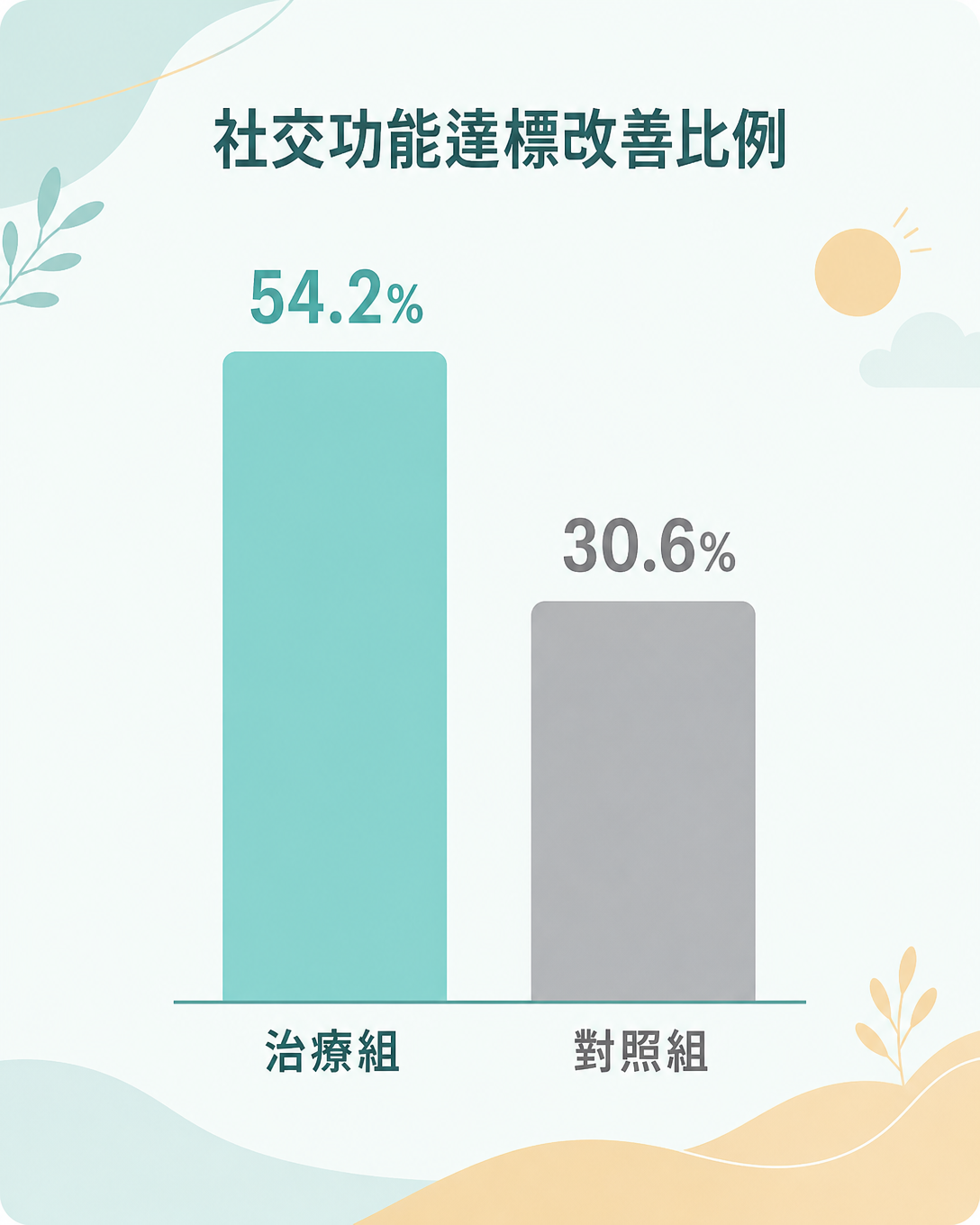
- Clinically meaningful social improvement: 54.2% active versus 30.6% control, nearly double2.
- Behaviour: 40.6% versus 19.7%2.
- Sleep also improved significantly, with no serious adverse events throughout2.
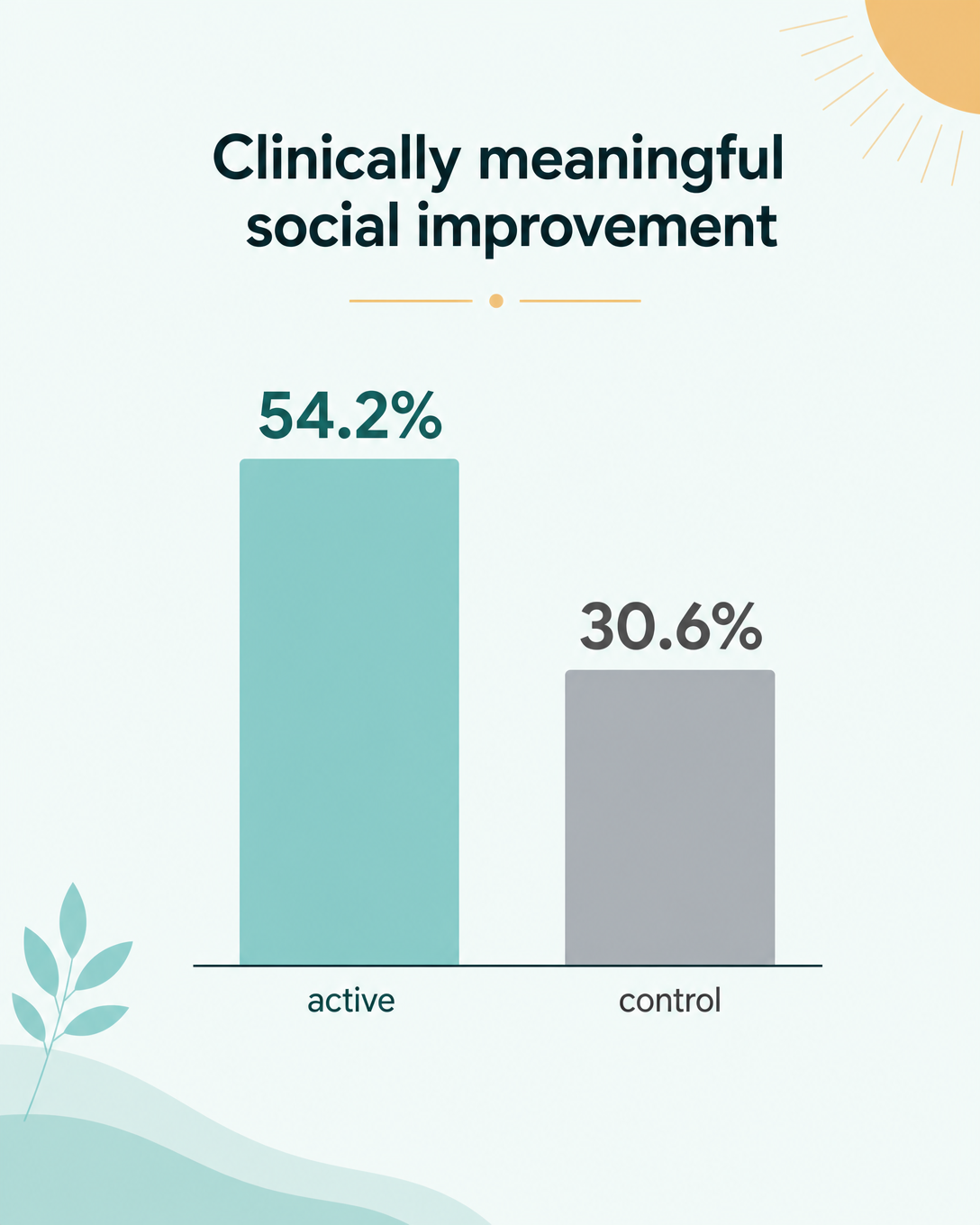
54.2% of children in the active group reached clinically meaningful social improvement, versus 30.6% in the control group.
For a parent, those numbers describe a real option: a gentle, home-based, well-tolerated adjunct with large-trial support behind it2,3.
4. How it differs from tDCS, rTMS, and TPS
This is where parents most often get confused, and it is worth separating:
- tDCS (direct current): a constant low current that makes a region "more excited" or "quieter." More studies, but no large pivotal trial and no approved autism use4.
- rTMS (magnetic): induces current in the brain with magnetic fields; bulky clinic-only equipment; still research-stage for autism4.
- TPS (pulse stimulation): the one most easily confused, it uses focused ultrasound, not electricity. A different modality entirely, do not mix them up1.
Remember one simple rule: tPCS is electricity, TPS is ultrasound.
5. Is it "approved"? A point that must be made clear
No single brain-stimulation technique has a universal approval for autism; approval is decided device by device and region by region1.
For the AscenZ-IV device that Hong Kong families may encounter, its manufacturer states it is approved by Singapore's Health Sciences Authority with an indication covering improving social functioning and sleep in autism, and registered in Hong Kong under the HKMDCS3. This information comes from the manufacturer; verify with the relevant regulators before deciding.
6. Is it safe?
The existing evidence is reassuring. The 312-child trial recorded no serious adverse events, only mild temporary headache and scalp redness2. A dedicated study in healthy adults also confirmed no significant sensory or pain problems from this low-intensity pulsed current5.
But "safe" does not mean "unconditional." Pacemakers, metal inside the skull, epilepsy history, and pregnancy are contraindications or reasons to consult a doctor first3.
7. An honest summary: a young, but worth-knowing option
Said plainly, transcranial pulsed current stimulation is still an emerging method. There are only a few dozen published studies worldwide, parameters vary, and long-term effects lack data1. It is not a cure, and it does not replace behavioural or speech therapy.
But it is also the only brain-stimulation approach for autism that currently has both a large, high-quality randomised trial behind it and a home-use form factor2,3. For families wanting to take one more step beyond existing therapy, this is an option worth discussing seriously with a doctor, not a trend to chase blindly.

Every moment of connection is the truest return on this journey.
References
- Zhang S, et al. Transcranial pulsed current stimulation: A scoping review of the current literature on scope, nature, underlying mechanisms, and gaps. Psychophysiology. 2024;61(3):e14521. PMID: 38200645. https://pubmed.ncbi.nlm.nih.gov/38200645/
- Liu Z, Zhong S, Ho RCM, et al. Transcranial Pulsed Current Stimulation and Social Functioning in Children With Autism: A Randomized Clinical Trial. JAMA Network Open. 2025;8(4):e255776. PMID: 40257798. https://pubmed.ncbi.nlm.nih.gov/40257798/
- AscenZion Neuromodulation — manufacturer materials and press release on the JAMA publication. https://ascenzion.com.sg/press-release-significant-paper-published-in-jama-on-the-effect-of-transcranial-pulsed-current-stimulation-on-social-functioning-in-children-with-autism/
- Hsu CW, et al. A network meta-analysis of non-invasive brain stimulation interventions for autism spectrum disorder. Neuroscience & Biobehavioral Reviews. 2024. PMID: 38981573. https://pubmed.ncbi.nlm.nih.gov/38981573/
- Jaberzadeh S, Zoghi M. Exploring sensory, motor, and pain responses as potential side or therapeutic effects of sub-2 mA, 400 Hz transcranial pulsed current stimulation. PLoS One. 2023;18(12):e0290137. PMID: 38091312. https://pubmed.ncbi.nlm.nih.gov/38091312/