When you compare autism brain-stimulation methods online, the most common confusion is three acronyms: tPCS, tDCS, rTMS. They look like siblings but differ greatly in principle, evidence, and how they are used. This article uses a table and a few paragraphs to separate the three clearly, so you can both speak and understand when you talk to a doctor.

1. Meet the three methods in one sentence
- tPCS (transcranial pulsed current stimulation): weak pulsed current follows and tunes brain rhythm; home-use devices exist1,2.
- tDCS (transcranial direct current stimulation): constant direct current makes a region "more excited" or "quieter"; mostly clinic or research use2,3.
- rTMS (repetitive transcranial magnetic stimulation): magnetic pulses induce current in the brain; bulky clinic-only equipment4,5.
Remember this contrast: tPCS is pulsed current, tDCS is direct current, rTMS is magnetic.
2. Evidence strength: an unequal comparison
The three differ a lot in how mature their autism evidence is:
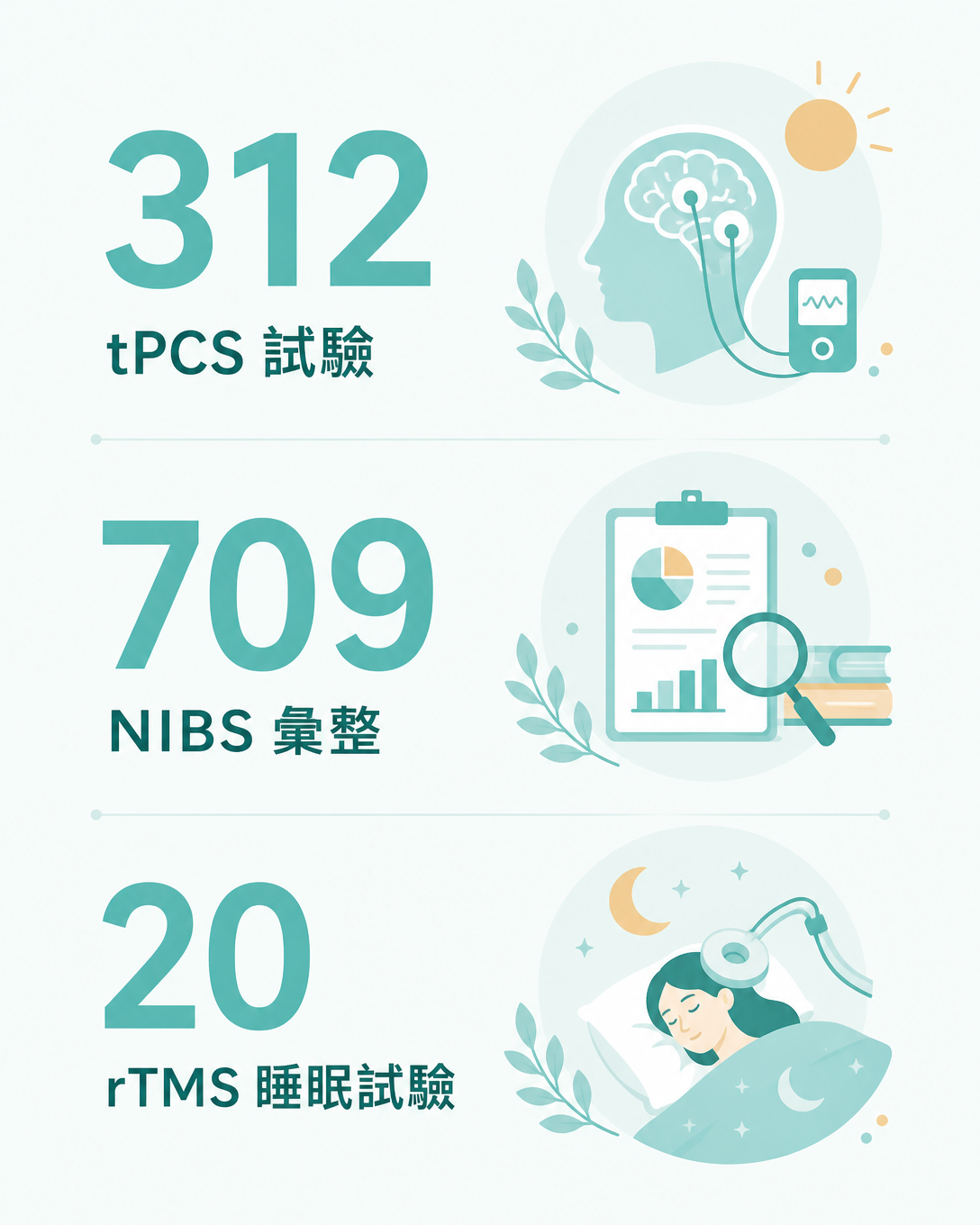
- tPCS: has the largest and most rigorous single trial, a randomised, double-blind, placebo-controlled study of 312 children. Clinically meaningful social improvement 54.2% versus 30.6%, behaviour 40.6% versus 19.7%, sleep improved, no serious adverse events1.
- tDCS: the most studies, but all meta-analyses pooling small trials; social communication effect −0.66, and the network meta-analysis found only one specific montage beat control; no large pivotal trial2,3,6.
- rTMS: a 2023 meta-analysis noted that of 16 studies, only 1 was a randomised, parallel, double-blind sham-controlled trial; the largest trial is still at protocol stage with results unpublished7,8.
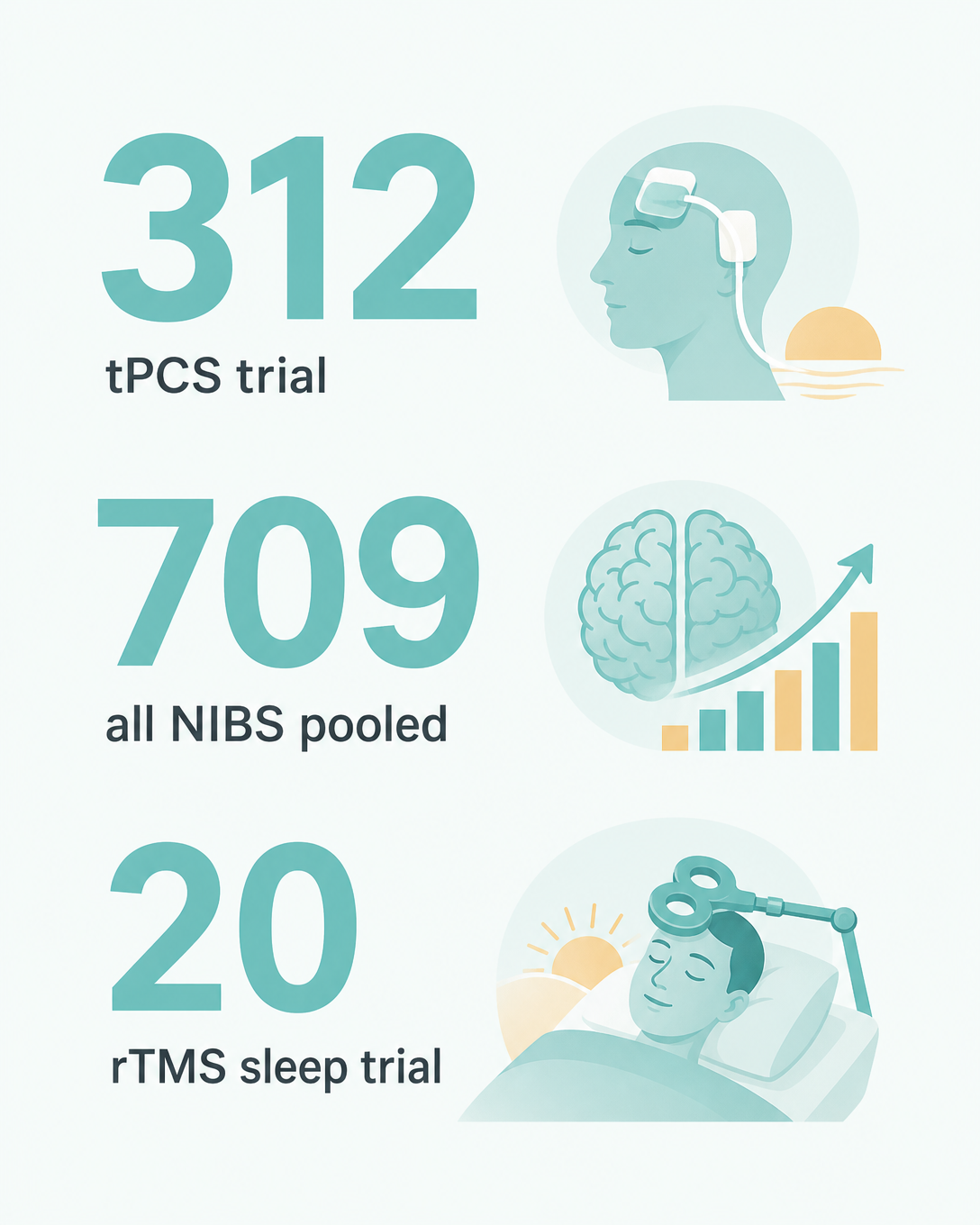
tPCS trial n=312, all NIBS pooled n=709, rTMS sleep trial n=20.
In short: tDCS is "many studies, missing one large pivotal trial"; rTMS is "plausible mechanism, missing a large child trial"; tPCS is "only one, but large and rigorous"1,2,7.
3. Where you can use them: this directly affects your life
- tPCS: home-use device, parent-administered twenty minutes daily, a huge convenience for families who struggle to reach clinics2.
- tDCS: mostly clinic or research settings2,3.
- rTMS: clinic-only, bulky equipment, professional operation4,8.
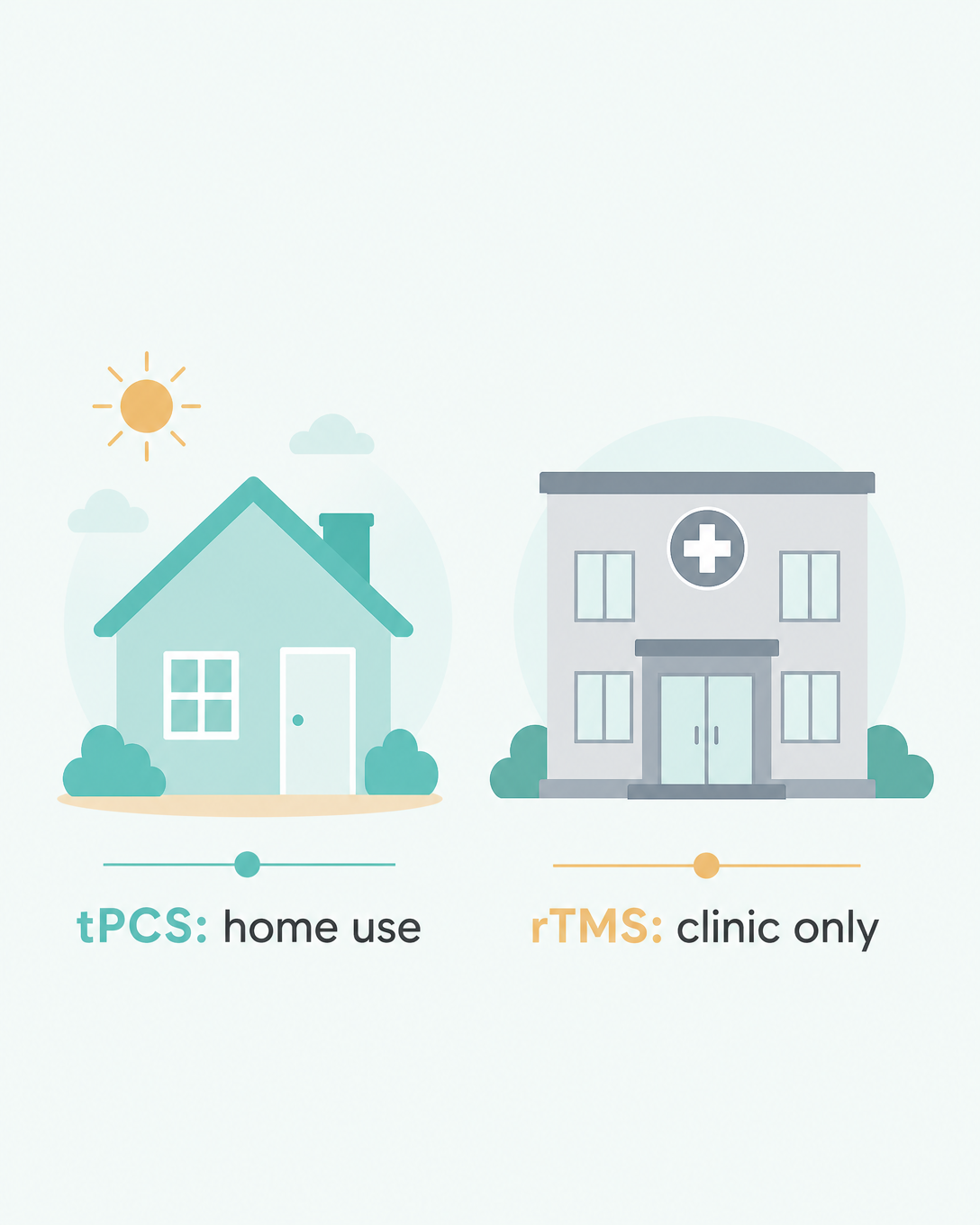
tPCS can be used at home; rTMS is clinic-only.
For time-pressed parents also caring for other family members, "can I do it at home" is often the deciding difference.
4. Regulatory status: the one exception among the three
- tDCS: no approved autism use, research-stage2,3,6.
- rTMS: no approved autism use, research-stage7,8.
- tPCS: for the AscenZ-IV device, its manufacturer states approval by Singapore's Health Sciences Authority (covering improving social functioning and sleep in autism) and registration in Hong Kong2.
This is a real distinction between the three, but it must be stated precisely: the information comes from the manufacturer and should be verified with regulators, and a device approval is not an approval of the whole technique2.
5. The difference in principle: they do different things
- tDCS is "polarising": constant current acts like a switch, holding a region more excited or quieter2,6.
- tPCS is "tuning": pulsed current tries to follow the brain's own rhythm, resynchronising disorder and restoring excitation-inhibition balance1.
- rTMS is "inducing": magnetic fields pass through the skull and induce current in the brain, with frequency-dependent effects4,5.
Parents need not remember the details, only the direction: tPCS is designed to "restore balance," not "force change."
6. A naming trap you must beware of
In Chinese, two things differ by one character but are often conflated:
- tPCS (transcranial pulsed current stimulation): uses electricity.
- TPS (transcranial pulse stimulation): uses focused ultrasound.
The latter was used in a 2023 study of 32 adolescents with autism, reporting reduced scores9, but that is ultrasound, not electricity. When you search "pulse stimulation," confirm first: electricity or ultrasound? Their evidence cannot be mixed9.
7. Land in a sober place
- There are no head-to-head trials between the three; all comparisons above are across different studies, populations, and scales, and cannot be compared strictly statistically1.
- The only large, rigorous randomised trial is the tPCS one (n=312)1.
- Effects are small to moderate across all three; 54.2% means "reached a 10% improvement," not "fully restored"1.
- The pivotal tPCS trial has device-maker involvement and should be disclosed1.
- All three are adjuncts to behavioural, occupational, and speech therapy, not cures1,2,6.
Choosing a brain-stimulation method is not choosing "which is more miraculous," but "which has evidence, fits your family's life, and is gated by a doctor." Think those three through, and the answer often becomes clear.

Every moment of connection is the truest return on this journey.
References
- Liu Z, Zhong S, Ho RCM, et al. Transcranial Pulsed Current Stimulation and Social Functioning in Children With Autism: A Randomized Clinical Trial. JAMA Network Open. 2025;8(4):e255776. PMID: 40257798. https://pubmed.ncbi.nlm.nih.gov/40257798/
- AscenZion. Our Technology (manufacturer site) — EquilPulse™ Technology description. https://ascenzion.com.sg/our-technology/
- Amjad MM, et al. Efficacy of transcranial direct current stimulation in children and adolescents with autism spectrum disorder: A systematic review and meta-analysis. Brain Research. 2026;1873:150114. PMID: 41412208. https://pubmed.ncbi.nlm.nih.gov/41412208/
- Enticott PG, et al. A double-blind, randomized trial of deep repetitive transcranial magnetic stimulation (rTMS) for autism spectrum disorder. Brain Stimulation. 2014;7(2):206-211. PMID: 24280031. https://pubmed.ncbi.nlm.nih.gov/24280031/
- Yang Y, et al. High-Frequency Repetitive Transcranial Magnetic Stimulation Applied to the Parietal Cortex for Low-Functioning Children With Autism Spectrum Disorder: A Case Series. Frontiers in Psychiatry. 2019;10:293. PMID: 31143132. https://pubmed.ncbi.nlm.nih.gov/31143132/
- Chen YB, et al. A network meta-analysis of non-invasive brain stimulation interventions for autism spectrum disorder: Evidence from randomized controlled trials. Neuroscience & Biobehavioral Reviews. 2024;164:105807. PMID: 38981573. https://pubmed.ncbi.nlm.nih.gov/38981573/
- Smith JR, et al. Treatment Response of Transcranial Magnetic Stimulation in Intellectually Capable Youth and Young Adults with Autism Spectrum Disorder: A Systematic Review and Meta-Analysis. Neuropsychology Review. 2023;33(4):834-855. PMID: 36161554. https://pubmed.ncbi.nlm.nih.gov/36161554/
- Enticott PG, et al. Repetitive transcranial magnetic stimulation (rTMS) in autism spectrum disorder: protocol for a multicentre randomised controlled clinical trial. BMJ Open. 2021;11(7):e046830. PMID: 34233985. https://pubmed.ncbi.nlm.nih.gov/34233985/
- Cheung T, et al. Effects of transcranial pulse stimulation on autism spectrum disorder: a double-blind, randomized sham-controlled trial. Brain Communications. 2023;5(5):fcad226. PMID: 37701816. https://pubmed.ncbi.nlm.nih.gov/37701816/