As the parent of a child with autism, what you care about most is rarely the distant academic vocabulary. It is a handful of practical questions: will my child make eye contact more, will their emotions settle, will they sleep through the night. This article answers those questions, point by point, using one rigorous clinical study. We are not going to talk about miracles. We are going to talk about the data, and what that data means for your day-to-day life and your child's.
First, one thing made clear: the treatment at the heart of this study is called transcranial pulsed current stimulation. It sends a very weak pulsed current (about 0.7 mA, roughly eight hundred times weaker than electroconvulsive therapy) through electrodes placed on the scalp, gently adjusting activity in certain parts of the brain. Each session lasts about twenty minutes, and the child only feels a faint sensation on the scalp1.
1. Social functioning: nearly double the difference
The study followed 312 children aged three to fourteen with autism, split into two groups. One received real stimulation, the other a sham (the device looked identical but delivered almost no current). On the parent-rated Autism Treatment Evaluation Checklist, children who received real stimulation improved their social functioning by an average of 7.17 points (10.7%), versus only 4.13 points (5.8%) in the sham group1.
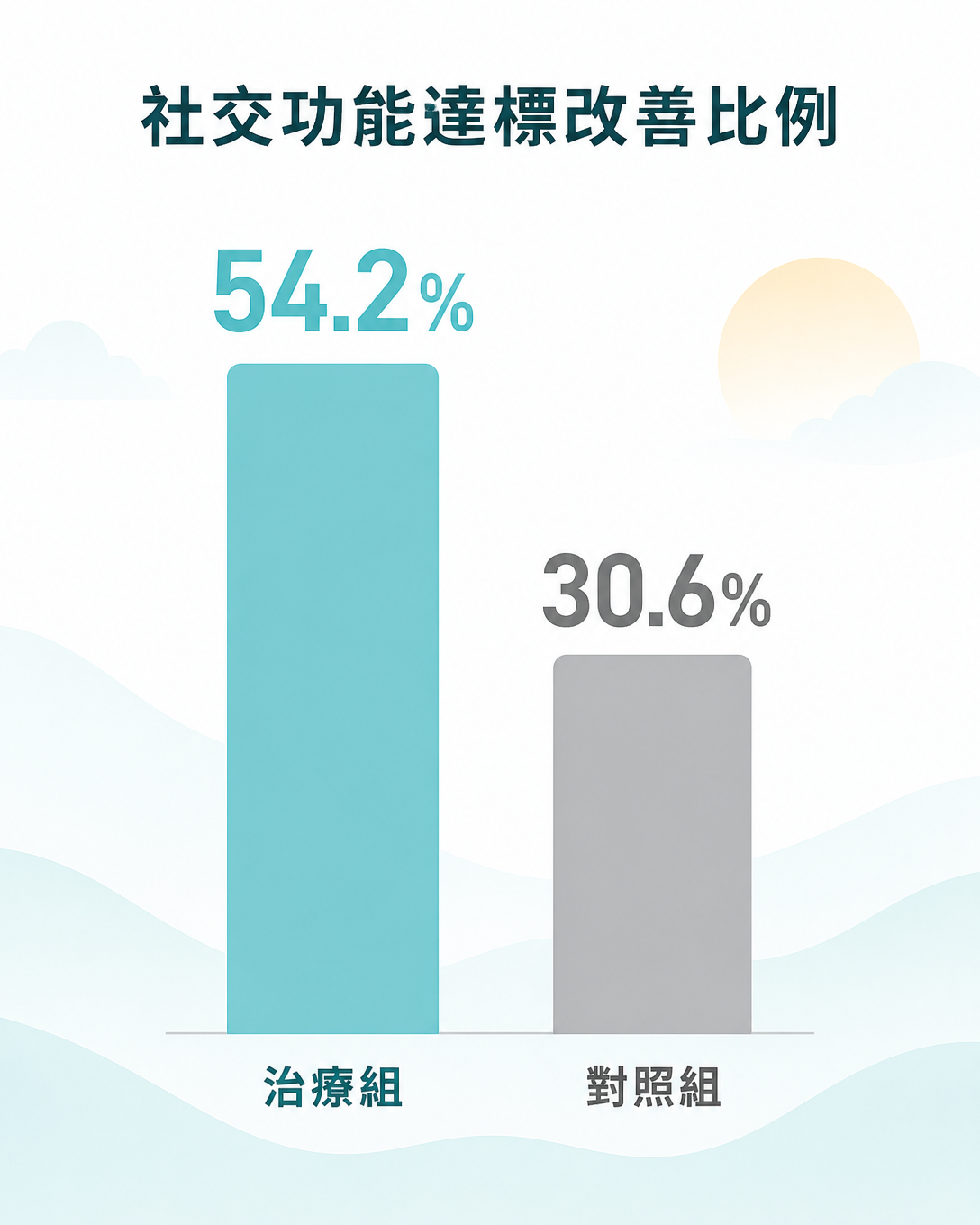
The more telling figure is the bar for "clinically meaningful" improvement. The study set in advance that social functioning had to improve by at least 10% to count as a real gain. In the active group, 54.2% of children reached that bar, versus 30.6% in the sham group, close to double1.
What does this mean for a family? Social connection is the core, most painful difficulty in autism. When a child begins to notice others more, to respond when called, even by one small step, the communication burden on the whole family lightens. Every time your child looks at you and responds, that is the moment you have been waiting for.
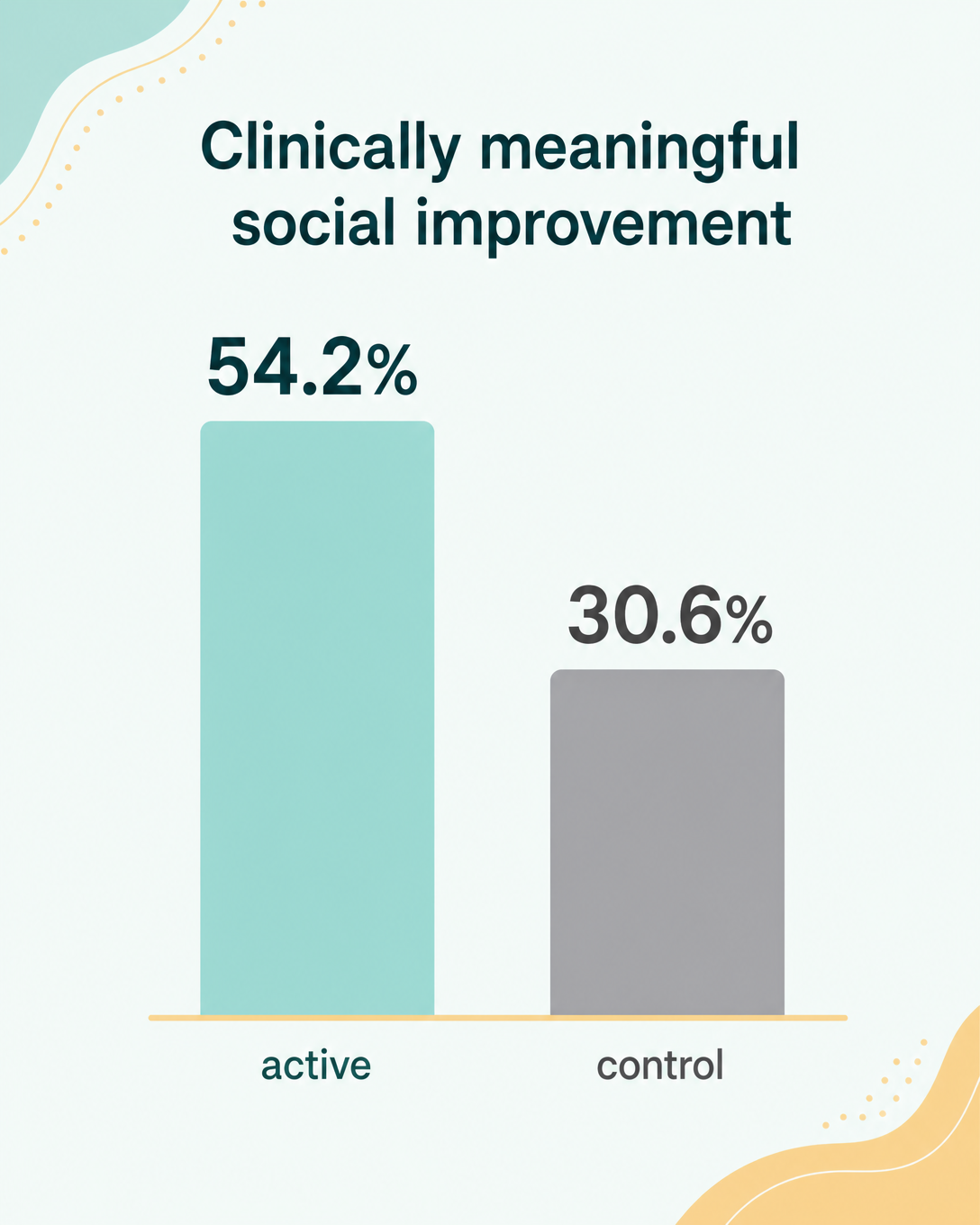
54.2% of children in the active group reached clinically meaningful social improvement, versus 30.6% in the control group.
2. Behaviour and emotion: the clearest gains are sensory
On the Autism Behavior Checklist, 40.6% of children receiving real stimulation reached the 10% improvement threshold, versus 19.7% in the sham group. The most significant gains appeared in the sensory domain, meaning how the child reacts to sound, touch, and other environmental input1.
Many autistic children are highly sensitive to sensory input and can tip into distress over a single sound or touch. When that reactivity settles, emotional ups and downs reduce, and the daily "meltdowns" parents brace for become less frequent. The atmosphere of a home is often built, quietly, out of those small everyday calms.
3. Sleep: less daytime drowsiness
Sleep scores also showed a significant difference. The active group's overall sleep score improved by 4.2 points, versus 1.9 in the sham group, and that gain was driven mainly by a clear drop in daytime sleepiness1.
Autistic children commonly have sleep problems, and poor sleep makes daytime mood and behaviour harder to manage. When a child is less drowsy and more alert, they do better in lessons, therapy, and interaction. Parents, in turn, lose one source of nightly strain2.
4. Safety: no serious side effects
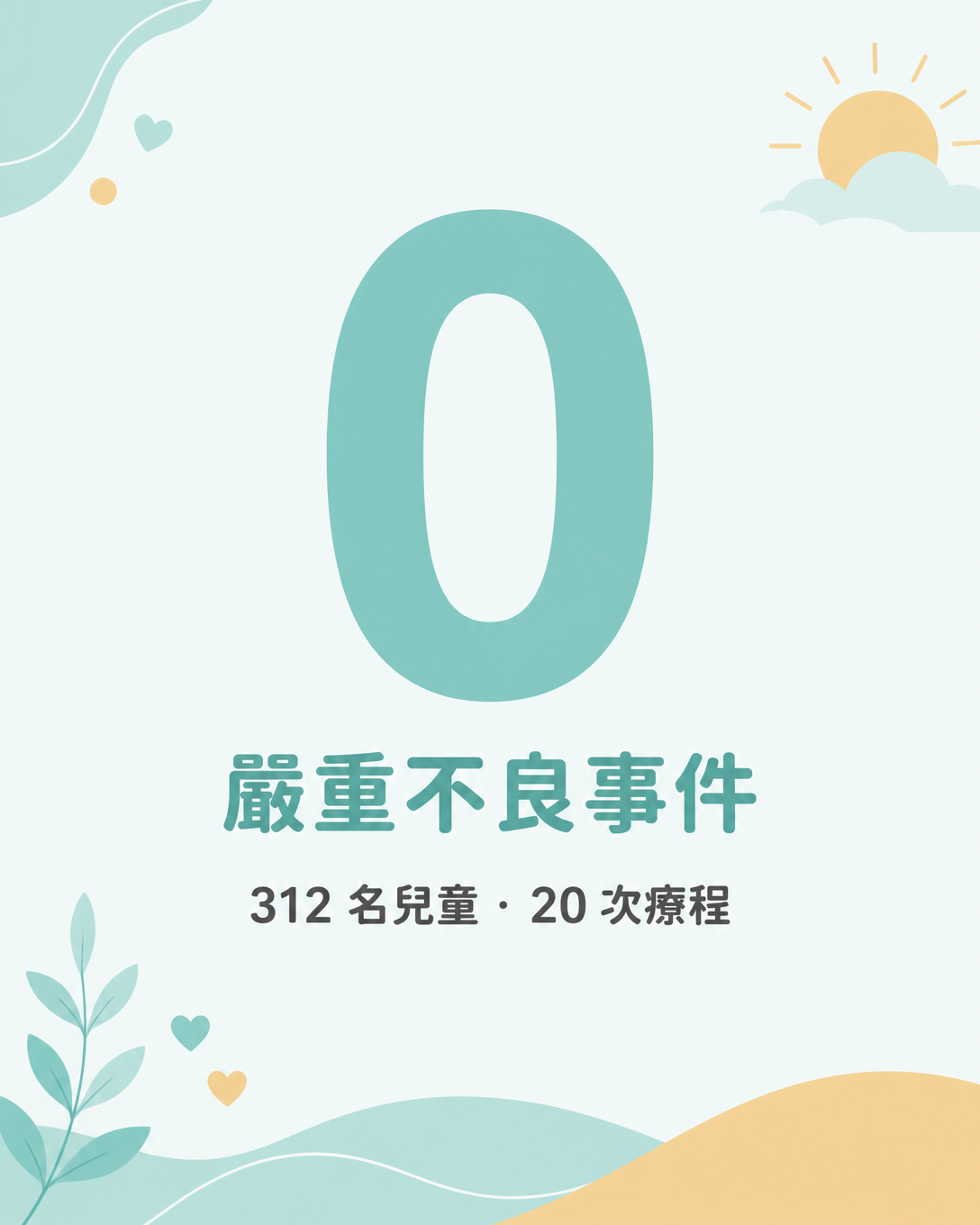
This is the point parents most need to hear. Across 312 children and twenty sessions each, there were no serious adverse events. The only effects seen were mild, temporary headache (19 children) and brief scalp redness under the electrodes (27 children, fading within about thirty minutes), and no one withdrew because of side effects1. A separate study in healthy adults also confirmed that this low-intensity pulsed current causes no significant sensory, motor, or pain problems3.
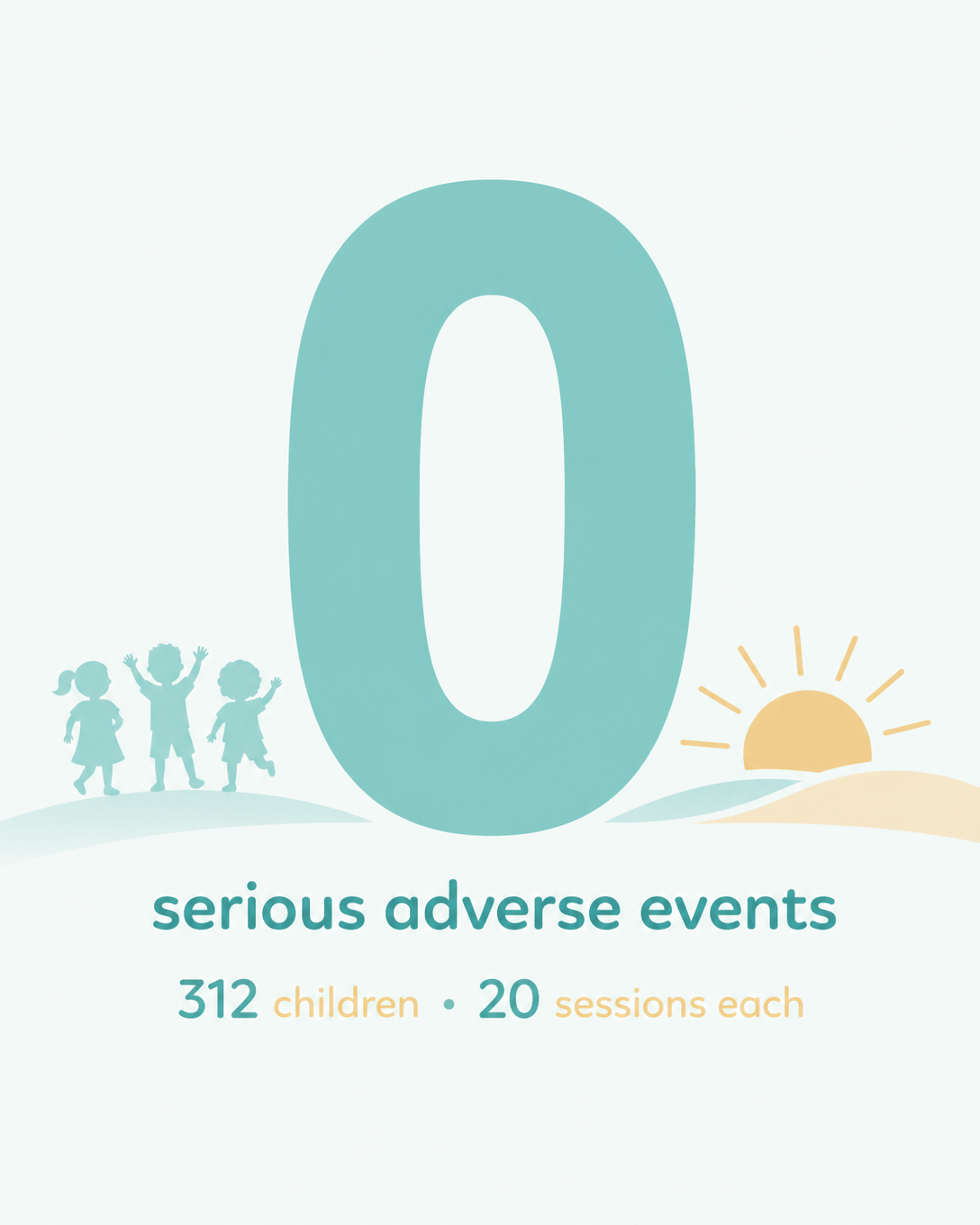
Across 312 children and 20 sessions each, zero serious adverse events.
5. It is an addition, not a replacement
One thing must be said honestly: in this study, every child also received one hour of standard therapy each day after the stimulation. In other words, the treatment was tested as an adjunct, not as a replacement for behavioural, occupational, or speech therapy1.
Its value is closer to this: it helps the child's brain enter a state that is more ready to learn, so that every minute of the therapy that follows works a little better. Autism is a lifelong neurodevelopmental condition. There is no "cure." What we can do is help each step along the way go better1.
6. Why it works: restoring the brain's balance
The researchers' proposed explanation is that certain regions of the autistic brain often show an imbalance of too much excitation and too little inhibition. The treatment places the "inhibitory" electrode over a prefrontal region involved in social and self-regulation, and the "excitatory" electrode over the cerebellum, aiming to bring excitation and inhibition back into balance and strengthen the brain networks behind social connection1.
This explanation remains a hypothesis. A 2024 review also cautioned that the full mechanism of this approach is not yet understood by science4. We share it so you understand the reasoning, not so you take it as settled fact.
7. Honest limits
As responsible information, this article must state the limits plainly:
- This is one large, high-quality study, but independent replication has not yet been published1.
- The study's authors include the founder of the device manufacturer, so readers should keep that relationship in mind1.
- The effect size is small to moderate; the 54.2% figure means "reached a 10% improvement," not "social functioning fully restored"1.
- The study was conducted in mainland China; its applicability to Hong Kong children is a reasonable assumption, not directly proven1.
Every moment of connection is the truest return on this journey.
A note for parents
Any treatment decision for your child should be discussed with a qualified doctor or therapist, and should first rule out contraindications such as epilepsy, pacemakers, or metal in the skull. The registration and certification status of this approach in Hong Kong should be verified with the supplier and the relevant Department of Health mechanism before you decide5.
References
- Liu Z, Zhong S, Ho RCM, et al. Transcranial Pulsed Current Stimulation and Social Functioning in Children With Autism: A Randomized Clinical Trial. JAMA Network Open. 2025;8(4):e255776. PMID: 40257798. https://pubmed.ncbi.nlm.nih.gov/40257798/
- Han GT, et al. Associations between sleep problems and domains relevant to daytime functioning and clinical symptomatology in autism: A meta-analysis. Autism Research. 2022. PMID: 35635067. https://pubmed.ncbi.nlm.nih.gov/35635067/
- Jaberzadeh S, Zoghi M. Exploring sensory, motor, and pain responses as potential side or therapeutic effects of sub-2 mA, 400 Hz transcranial pulsed current stimulation. PLoS One. 2023;18(12):e0290137. PMID: 38091312. https://pubmed.ncbi.nlm.nih.gov/38091312/
- Zhang S, et al. Transcranial pulsed current stimulation: A scoping review of the current literature on scope, nature, underlying mechanisms, and gaps. Psychophysiology. 2024;61(3):e14521. PMID: 38200645. https://pubmed.ncbi.nlm.nih.gov/38200645/
- AscenZion Neuromodulation — manufacturer materials and press release on the JAMA publication. https://ascenzion.com.sg/press-release-significant-paper-published-in-jama-on-the-effect-of-transcranial-pulsed-current-stimulation-on-social-functioning-in-children-with-autism/