When you search "autism brain stimulation" online, you hit a wall of acronyms: tDCS, tACS, rTMS, tPCS, tPBM, each claiming "research support." This article spreads those tools out one by one, showing what each is, how far its evidence goes, and what still needs reserving. The goal is one thing: to help you tell evidence from promotion in a flood of information.
1. First, an honest verdict on the whole field
This field is "active but not mature." Multiple meta-analyses converge on one conclusion: these methods bring modest, domain-specific improvements with good tolerability, but studies are generally small, methods differ, and bias risk exists1,2.
In other words, it is not a scam, but it is far from a cure-all. Any claim that a single brain-stimulation method "cures autism" contradicts the existing evidence.
2. Meet the five tools
| Method | Plain-language principle | Autism evidence so far | |---|---|---| | tDCS (direct current) | Constant weak current makes a region "more excited" or "quieter" | Most studied; meta-analyses show modest gains in social and behaviour; no large pivotal trial1,2,4,6,7 | | tACS (alternating current) | Alternating current tries to "follow" brain rhythm | One small study (47 people, 40 Hz) improved social scores; research-stage8 | | rTMS (magnetic) | Magnetic field induces current in the brain | Positive but inconsistent; clinic-only; no approved autism use1,9 | | tPCS (pulsed current) | Weak pulsed current follows and tunes brain rhythm | Has the largest child trial (312); positive; device-level approval records5,10 | | tPBM (light) | Near-infrared light on the scalp | One 2025 review found reduced irritability; very early9 |
Reading this table, you see why tPCS is mentioned most in recent years: it is the only one of the five that has both a large randomised trial and a home-use form factor5,10.
3. Evidence, symptom by symptom
Autism symptoms are not one thing but several domains, and different methods have different evidence strength per domain:
- Overall symptoms: only one specific form of direct-current stimulation clearly beat control1.
- Social function and communication: direct-current meta-analyses show modest gains; the tPCS 312-child trial's primary social endpoint was positive (54.2% vs 30.6%)2,5,6.
- Repetitive behaviour: mixed, one 2026 meta-analysis found significant gains, the 2024 network meta-analysis did not1,6.
- Sleep: the tPCS trial's sleep questionnaire improved significantly, driven by less daytime sleepiness5.
- Language: no significant improvement across meta-analyses, the point where parents most need to manage expectations6.
Only 1 of 14 brain-stimulation methods beat placebo on overall autism symptoms.
4. The largest study: 312 children
Against a field of mostly small samples, a 2025 tPCS study stands out. Across 312 children aged three to fourteen over twenty sessions, 54.2% versus 30.6% reached clinically meaningful social improvement, behaviour was 40.6% versus 19.7%, sleep improved, and there were no serious adverse events5.
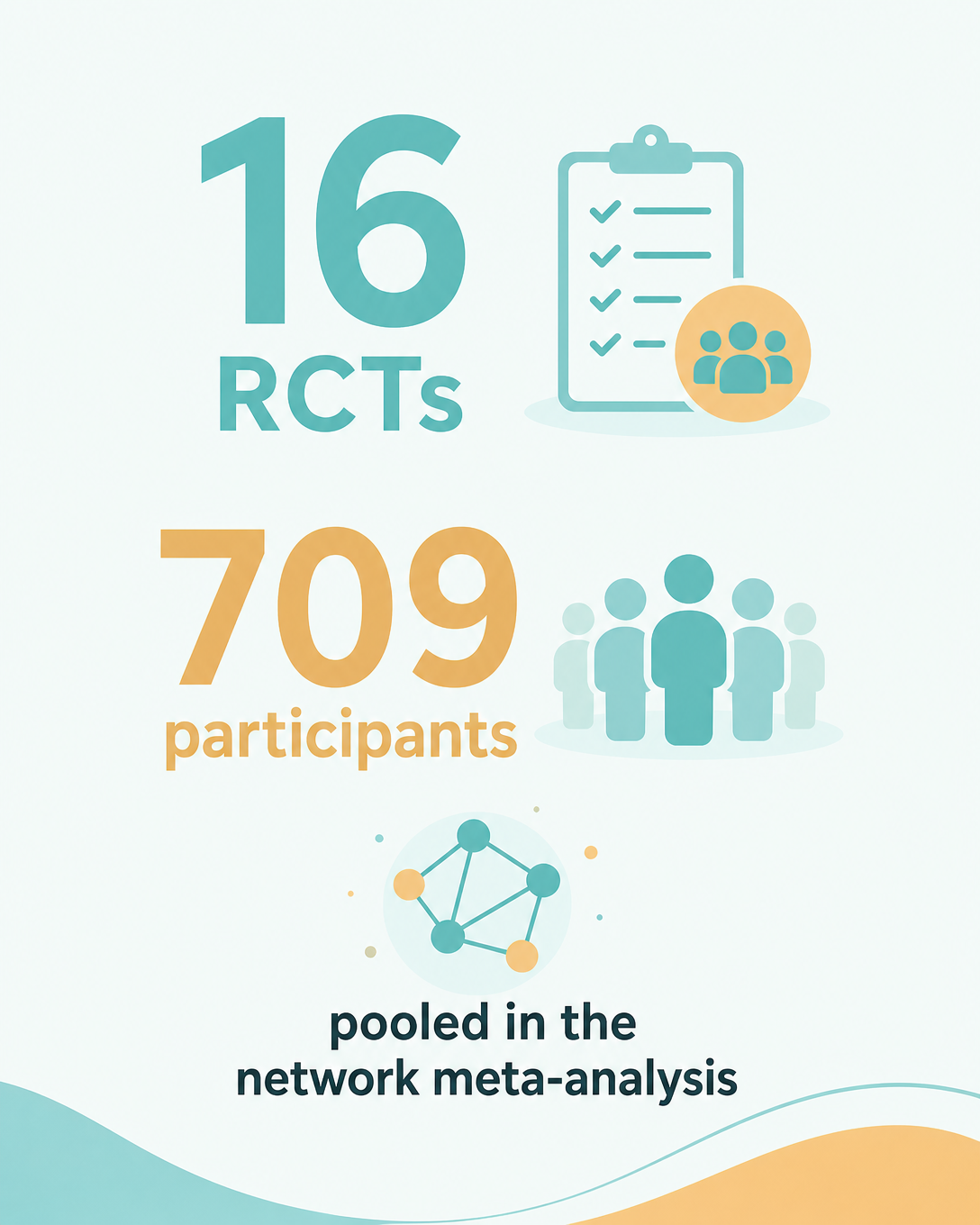
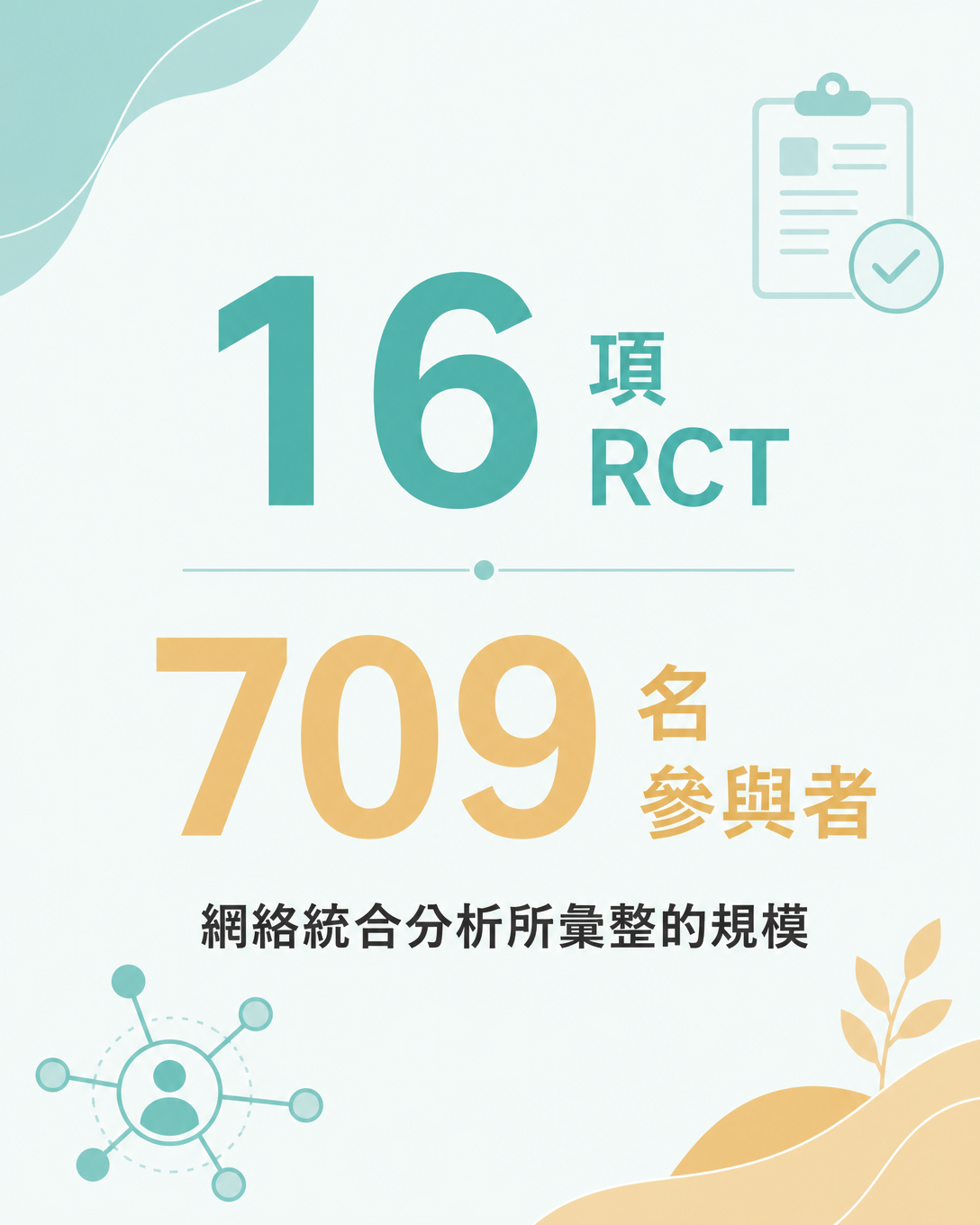
The network meta-analysis pooled 16 randomised trials and 709 participants.
For parents, the biggest meaning of those numbers is a reference point that is large and rigorous enough to measure the many small, uncontrolled new therapies against.
5. Safety: reassuring overall, but still needs gatekeeping
Across studies, adverse effects of these methods are mostly mild and transient, chiefly headache and scalp sensation; no serious events in child trials1,2,5. But one 2025 review noted a seizure in a non-autistic ADHD patient during magnetic stimulation; because autistic children already have higher epilepsy rates, screening beforehand matters especially9.
This reinforces the point: safety depends on a doctor's assessment and ruling out contraindications (epilepsy, pacemakers, metal in the skull) before use9.
6. Regulatory status: a key distinction
The US FDA has not approved any brain-stimulation technique for autism; in the US and Europe these methods are research-stage or off-label1,9. So whenever you see the word "approved," ask: which device, in which region, for which use?
In Asia, the AscenZ-IV tPCS device is stated by its manufacturer to be approved in Singapore with a use covering social functioning and sleep in autism, and registered in Hong Kong, a notable exception worth flagging, but the information comes from the manufacturer and should be verified10.
7. A sober place to land
- Brain stimulation is not a cure; it is an adjunct on top of behavioural, occupational, and speech therapy5,9.
- Effects are generally small to moderate, with publication-bias risk, early positive results are often inflated3.
- Language shows no significant evidence so far; parents should not over-expect there6.
- The largest tPCS trial has device-maker involvement and no published independent replication5.
The most rational stance: treat it as an option worth discussing with a doctor and adding cautiously on top of backbone therapy, not a hope to bet everything on.
Every moment of connection is the truest return on this journey.
References
- Hsu CW, et al. A network meta-analysis of non-invasive brain stimulation interventions for autism spectrum disorder: Evidence from randomized controlled trials. Neuroscience & Biobehavioral Reviews. 2024. PMID: 38981573. https://pubmed.ncbi.nlm.nih.gov/38981573/
- Therapeutic effects of tDCS on behavioral symptoms of autism spectrum disorders in children and adolescents: A systematic review and meta-analysis of randomized sham-controlled trials. Brain & Development. 2026. PMID: 42092376. https://pubmed.ncbi.nlm.nih.gov/42092376/
- Non-invasive brain stimulation for patient with autism: a systematic review and meta-analysis. Frontiers in Psychiatry. 2023. PMID: 37457781. https://pubmed.ncbi.nlm.nih.gov/37457781/
- Transcranial direct current stimulation in Autism Spectrum Disorder: A systematic review and meta-analysis. European Neuropsychopharmacology. 2021. PMID: 33773886. https://pubmed.ncbi.nlm.nih.gov/33773886/
- Liu Z, Zhong S, Ho RCM, et al. Transcranial Pulsed Current Stimulation and Social Functioning in Children With Autism: A Randomized Clinical Trial. JAMA Network Open. 2025;8(4):e255776. PMID: 40257798. https://pubmed.ncbi.nlm.nih.gov/40257798/
- Efficacy of transcranial direct current stimulation in children and adolescents with autism spectrum disorder: A systematic review and meta-analysis. Brain Research. 2026. PMID: 41412208. https://pubmed.ncbi.nlm.nih.gov/41412208/
- Transcranial direct current stimulation on social communication among children and adolescents with autism spectrum disorder: a systematic review and meta-analysis. Journal of Neurodevelopmental Disorders. 2026. PMID: 41555221. https://pubmed.ncbi.nlm.nih.gov/41555221/
- Transcranial Alternating Current Stimulation at 40 Hz Improves Social Functioning in Children With Autism Spectrum Disorder: A Randomized Clinical Trial. Biological Psychiatry. 2026. PMID: 42320780. https://pubmed.ncbi.nlm.nih.gov/42320780/
- Noninvasive Brain Stimulation for Neurodevelopmental Disorders: A Systematic Review. Journal of Neuropsychiatry and Clinical Neurosciences. 2025. PMID: 40350963. https://pubmed.ncbi.nlm.nih.gov/40350963/
- AscenZion Neuromodulation — manufacturer materials and press release on the JAMA publication. https://ascenzion.com.sg/press-release-significant-paper-published-in-jama-on-the-effect-of-transcranial-pulsed-current-stimulation-on-social-functioning-in-children-with-autism/