Social difficulty is the core, most heartbreaking part of autism. Watching other children naturally hold hands and play while your own sits alone in a corner is a pain no words can soothe. But precisely because of that, social improvement is also the most heavily researched and most mature area of intervention. This article explains two paths: one teaches skills, the other primes the brain. They do not conflict; they can run together.

1. Social difficulty is not your child's fault, nor yours
Autism's social difficulty has a physical basis, tied to an imbalance of excitation and inhibition and to unusual network connections in certain brain regions1. US CDC data put the rate at about 1 in 36 eight-year-old children2. Once you understand this as a difference in neural development rather than a failure of parenting, you can set aside self-blame and put your energy into effective intervention.
2. Path one: social-skills training, useful but with clear limits
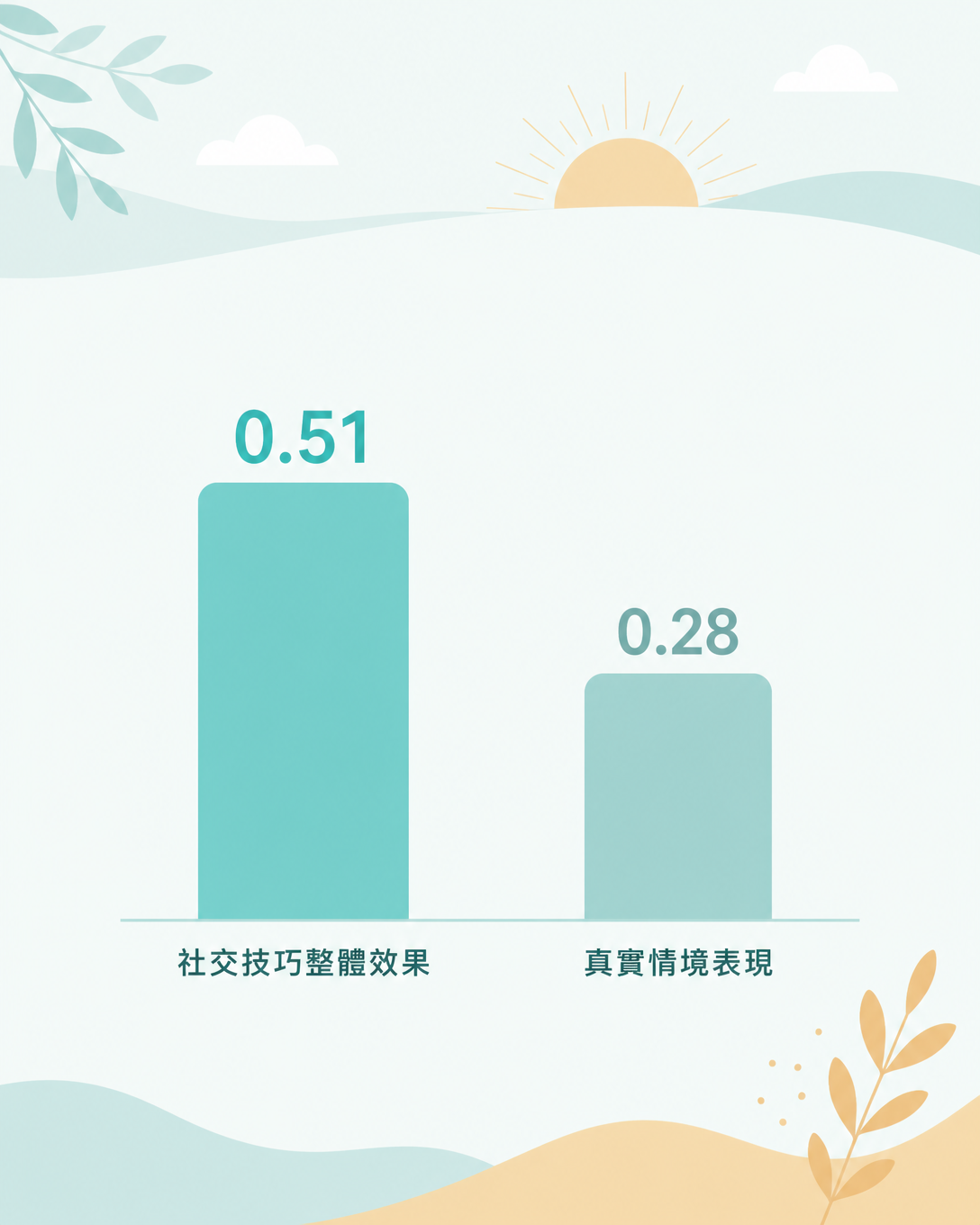
Social-skills training, including group social training, is among the most widely used approaches. A 2017 meta-analysis of 19 randomised trials found an overall medium effect (0.51), but revealed a key detail: children improved markedly on "social knowledge" measured by questionnaires, yet improved only modestly on "social performance" in real situations, and changes teachers observed at school were not significant3.
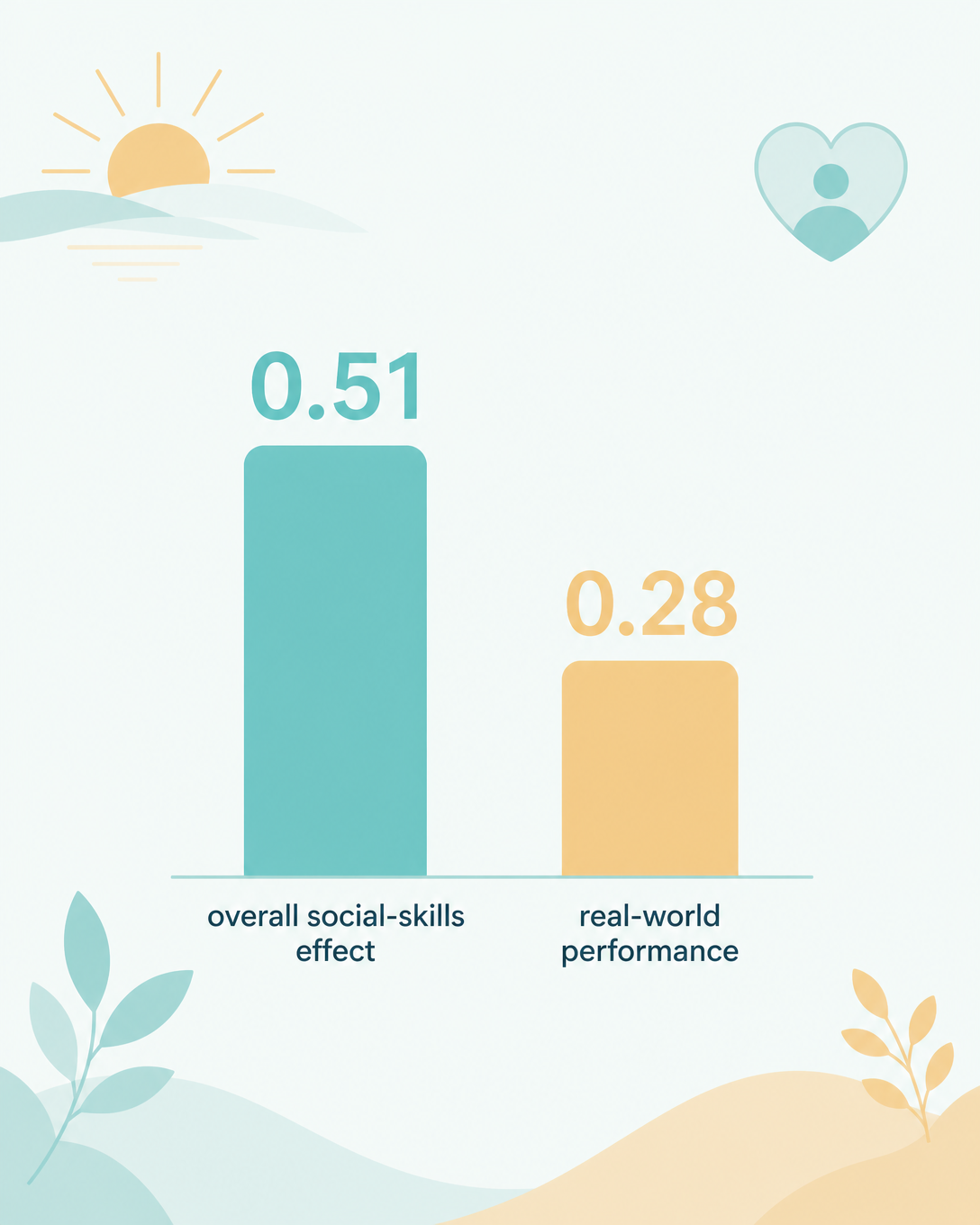
Overall effect 0.51, but real-world performance only 0.28: skills taught in groups do not always transfer.
What this means is that skills learned in class do not automatically transfer to the playground and everyday conversation3. A 2025 meta-analysis echoed this: social-skills training's overall effect is small to moderate, improving communication, reciprocity, and joint attention, but outcomes vary by method and child4.
The lesson for parents: social-skills training is worth doing, but do not expect it to "just work" after class. It needs lots of real-world practice to land.
3. Path two: from the brain level, the 312-child study
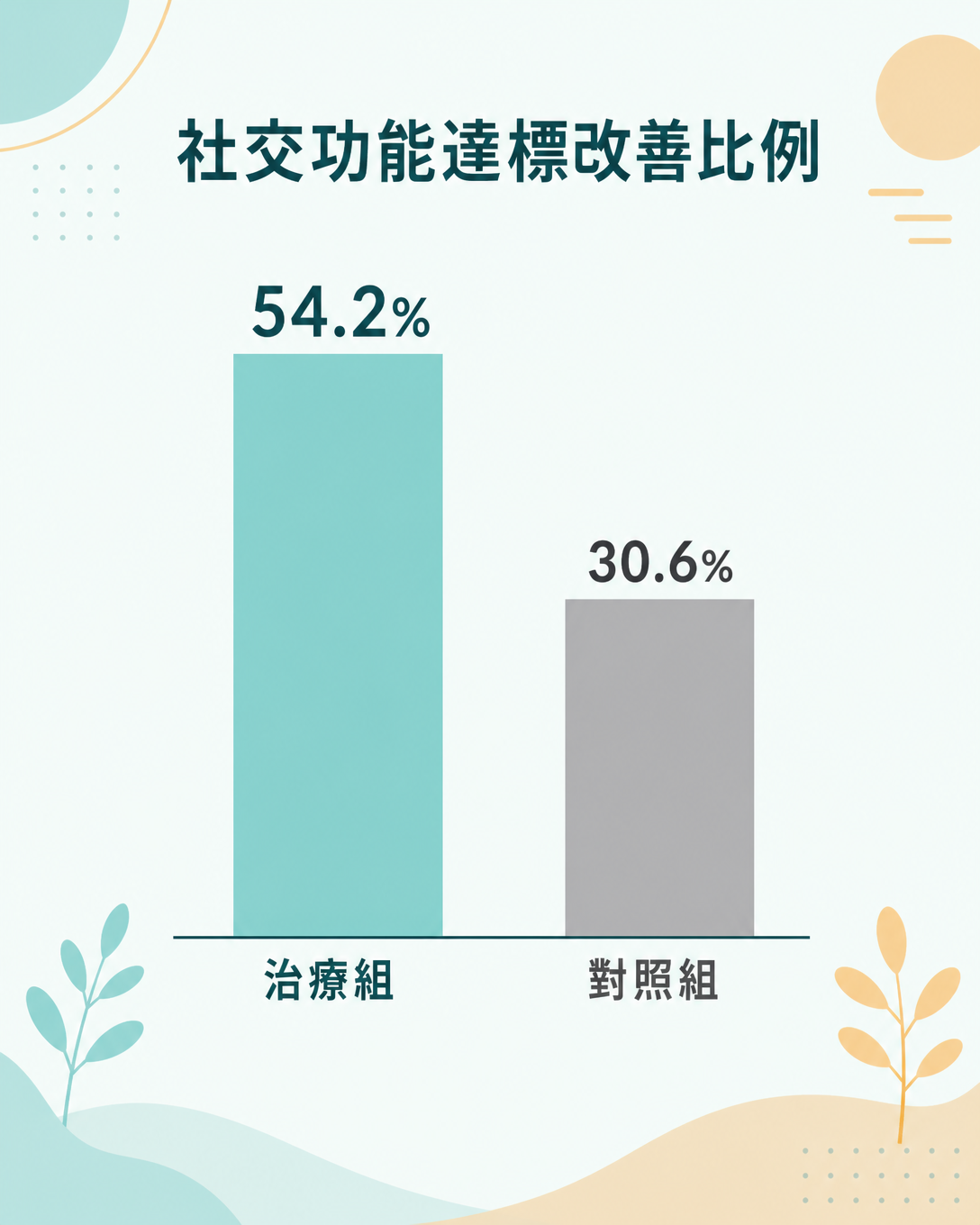
A newer path is "prepare the brain first." A 2025 study gave 312 children aged three to fourteen twenty sessions of transcranial pulsed current stimulation as an adjunct to daily therapy. Clinically meaningful social improvement reached 54.2% in the treatment group versus 30.6% control, nearly double, driven mainly by the sociability subdomain1.
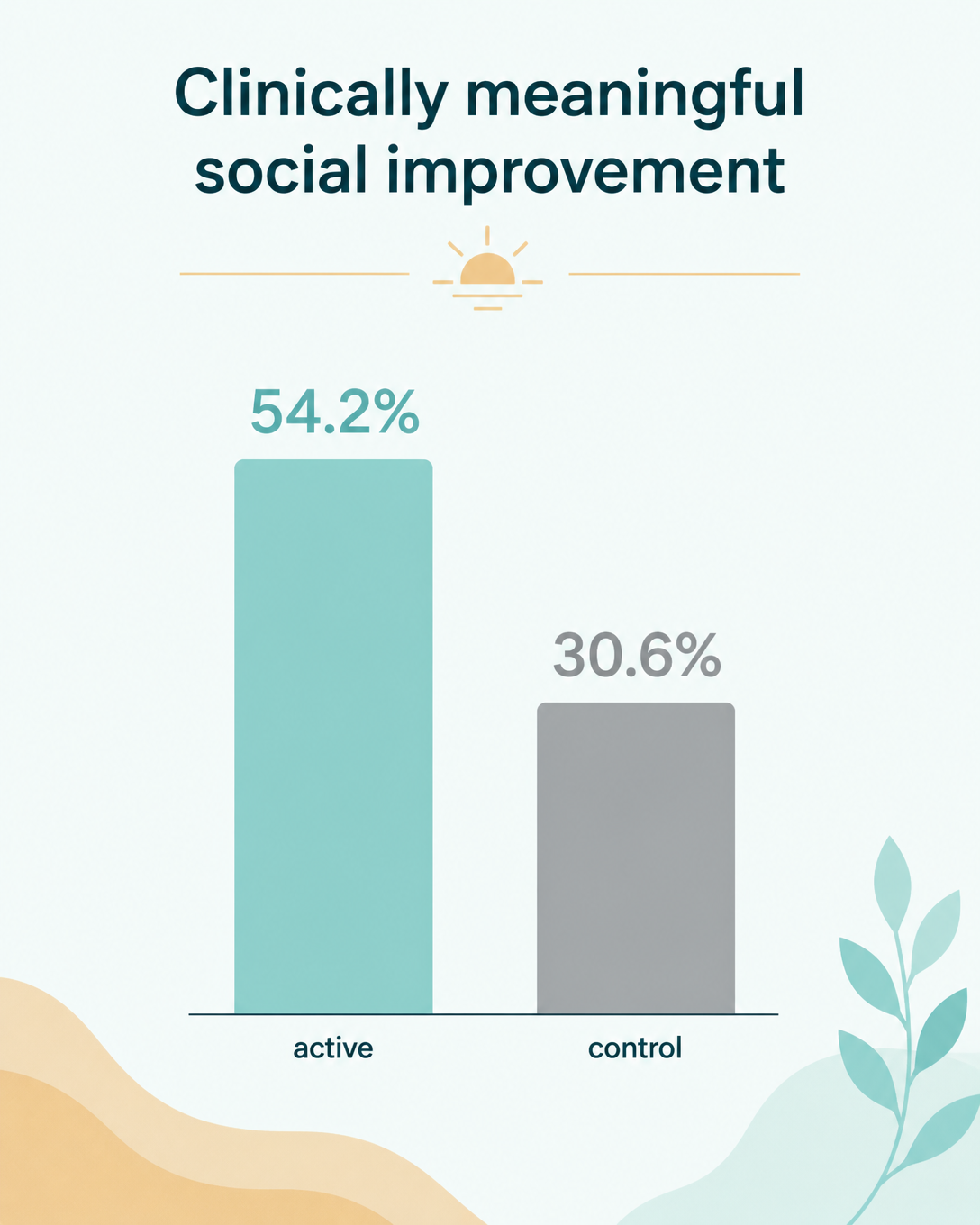
54.2% active versus 30.6% control reached clinically meaningful social improvement.
The researchers' explanation: the autistic brain often shows too much excitation and too little inhibition. The treatment places the "inhibitory" electrode over the left prefrontal region and the "excitatory" electrode over the right cerebellum, restoring balance and strengthening the "social brain" network, the very network social training targets1.
4. Joining the two paths: prime the brain, then amplify the training
These two paths are two sides of the same thing:
- Teaching skills teaches the child "what to do."
- Priming the brain gives the child's brain "the capacity to learn it."
The 312-child study used an "stimulation + daily therapy" addition design: every child still received one hour of standard therapy after stimulation1. The logic is to bring the brain into a state more ready to learn, so each hour of social training and speech therapy delivers more value.
For parents, this is a practical direction: rather than choosing one over the other, consider adding an evidence-based brain adjunct on top of backbone therapy to amplify its effect.
5. A counterpoint that must be put on the table
To be responsible, the "prime the brain" path's evidence is not one-sided. A 2024 network meta-analysis (16 trials, 709 people) found that no single brain-stimulation method significantly improved "social communication" overall5. In other words, the 312-child tPCS study is a striking exception in this field, not the norm, and it needs independent confirmation1,5.
This is not to pour cold water, but to warn that betting everything on a single method is dangerous. The steadiest path is still teaching skills and priming the brain together, on a backbone of therapy.
6. Manage expectations
- Social improvement is gradual, not dramatic; even the best behavioural meta-analyses show medium effects that may not transfer automatically3,4.
- The brain-stimulation evidence rests mainly on one large trial with device-maker involvement1.
- About 1 in 2 children in the active group reached the 10% improvement bar, meaning some children respond and some do not1.
- Autism is lifelong; any method improves specific symptoms and functioning, not a "cure"2.
7. A last word for parents
Every bit of social progress your child makes, even one extra second of eye contact or one more response to their name, is real and precious. Rather than chasing a single "fast" method, build a stable combination of teaching skills, priming the brain, and backbone therapy, adjusted step by step under a doctor's guidance. Going slowly but steadily is often how you go furthest.

Every moment of connection is the truest return on this journey.
References
- Liu Z, Zhong S, Ho RCM, et al. Transcranial Pulsed Current Stimulation and Social Functioning in Children With Autism: A Randomized Clinical Trial. JAMA Network Open. 2025;8(4):e255776. PMID: 40257798. https://pubmed.ncbi.nlm.nih.gov/40257798/
- Maenner MJ, Warren Z, Williams AR, et al. Prevalence and Characteristics of Autism Spectrum Disorder Among Children Aged 8 Years — Autism and Developmental Disabilities Monitoring Network, 11 Sites, United States, 2020. MMWR Surveillance Summaries. 2023;72(2):1-14. PMID: 36952288. https://pubmed.ncbi.nlm.nih.gov/36952288/
- Gates JA, Kang E, Lerner MD. Efficacy of group social skills interventions for youth with autism spectrum disorder: A systematic review and meta-analysis. Clinical Psychology Review. 2017;52:164-181. PMID: 28130983. https://pubmed.ncbi.nlm.nih.gov/28130983/
- Alahmari FS, Alhabbad AA, Alshamrani HA, Almuqbil MA. Effectiveness of social skills training interventions for children with autism spectrum disorder: A systematic review and meta-analysis. Saudi Medical Journal. 2025;46(3):226-237. PMID: 40096975. https://pubmed.ncbi.nlm.nih.gov/40096975/
- Chen YB, Lin HY, Wang LJ, et al. A network meta-analysis of non-invasive brain stimulation interventions for autism spectrum disorder: Evidence from randomized controlled trials. Neuroscience & Biobehavioral Reviews. 2024;164:105807. PMID: 38981573. https://pubmed.ncbi.nlm.nih.gov/38981573/