Parents in Hong Kong who start down the autism path quickly discover one thing: there is plenty of information, but "what do I do next" is hard to find. Public assessment has waiting lists, private therapy is expensive, and new treatments buzz in your ear. This article lays out the local reality, the existing evidence, and one adjunct method now reaching Hong Kong, all in one place.

1. First, understand: how many autistic children are there in Hong Kong?
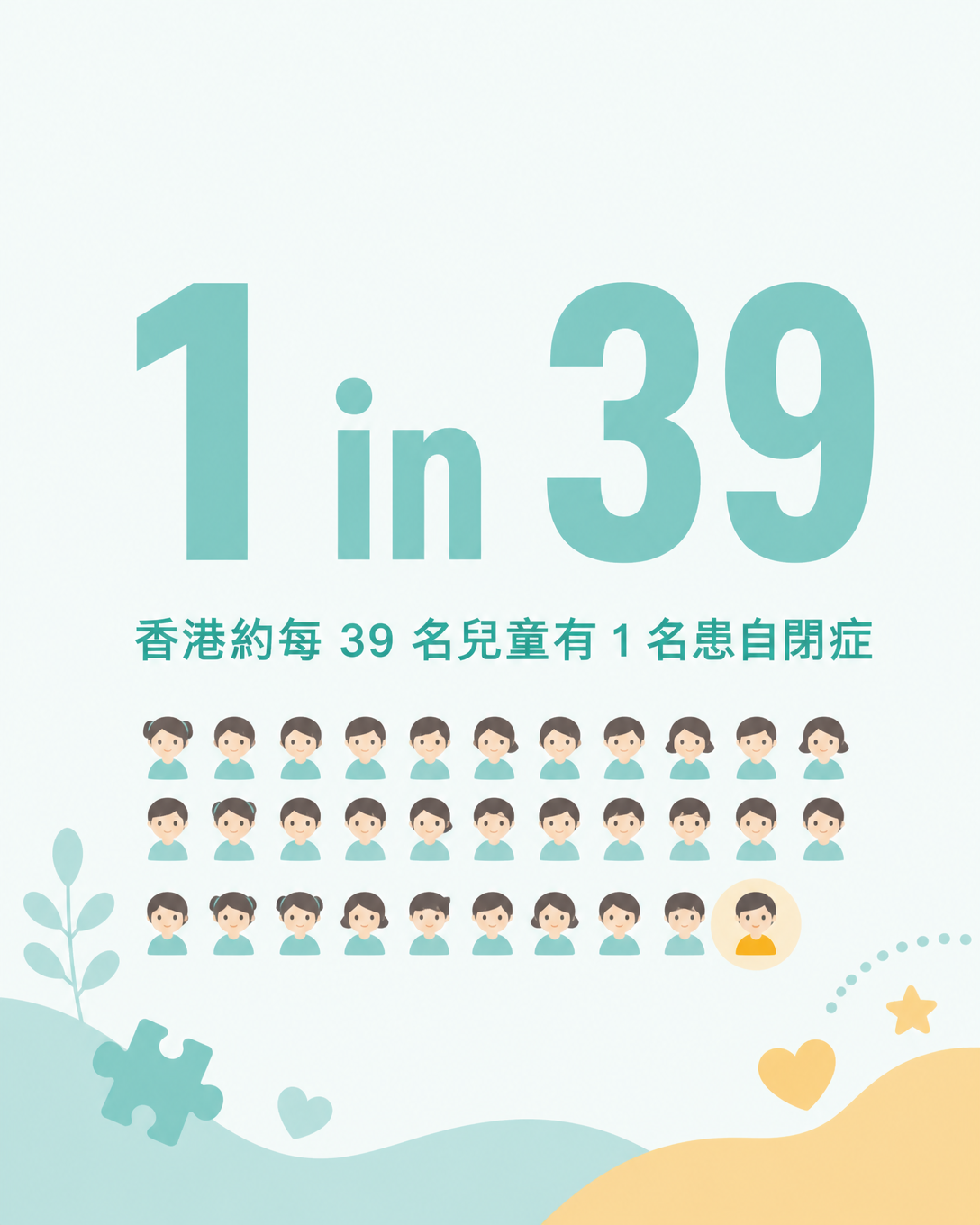
A 2025 school-based study screened 5,865 children and adolescents aged six to seventeen, then assessed a subsample of 317 in depth, estimating Hong Kong's autism prevalence at about 2.57%, roughly 1 in 39 children1. That figure is comparable to Western estimates, meaning autism in this city is not a marginal issue but the shared daily life of many families1.
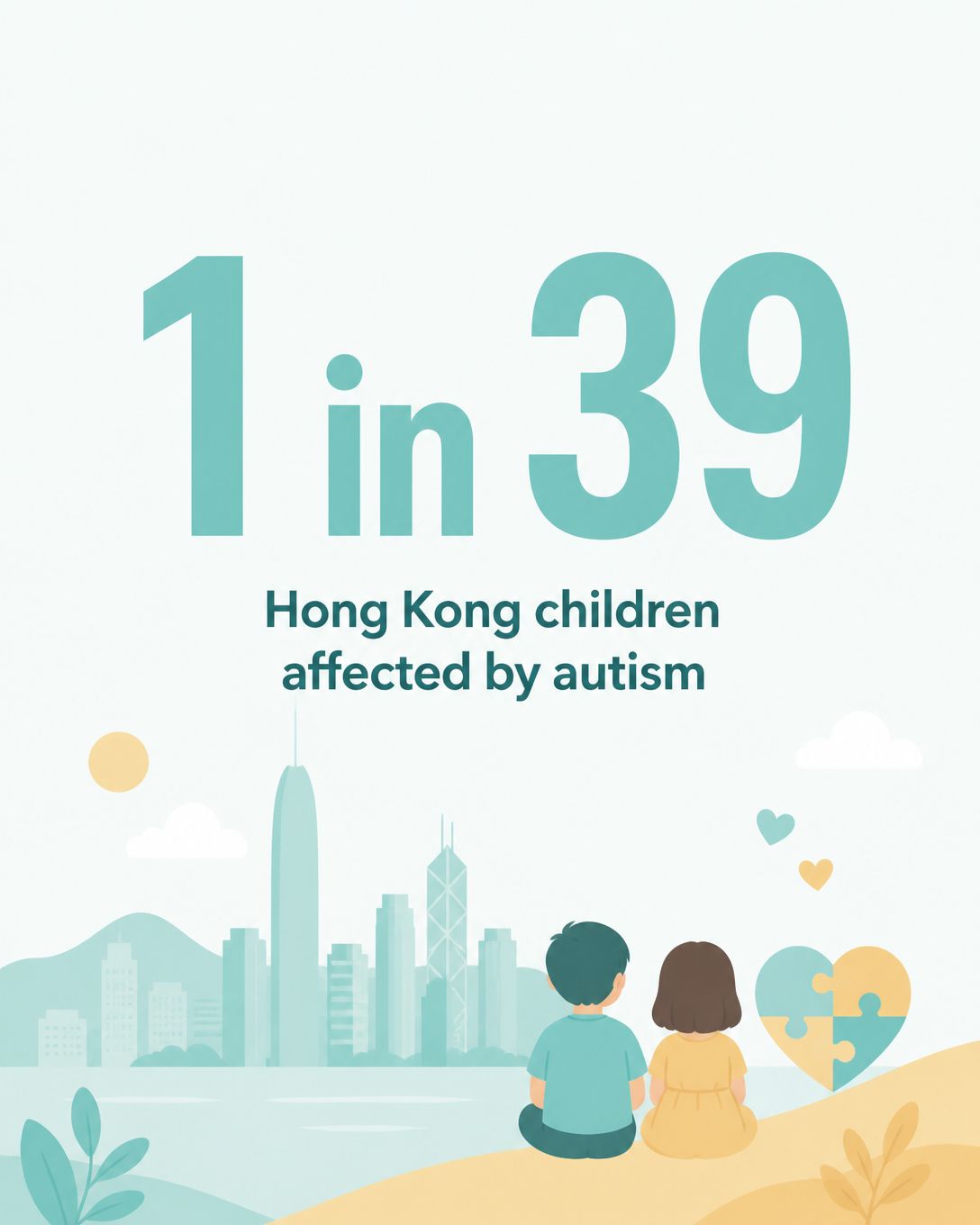
Roughly 1 in 39 Hong Kong children, or 2.57%, are estimated to have autism.
The study also found boys are diagnosed at notably higher rates than girls, and recommended community-based approaches to catch the presentations in girls that are more easily missed1. For a parent, the reminder is this: if a girl shows possible signs, seek assessment proactively, rather than delaying on the assumption that "autism is rarer in girls."
2. The treatment path in Hong Kong: public and private, side by side
Most families walk a path like this: first a diagnostic assessment at a Department of Health Child Assessment Centre, then preschool training or school support depending on age; meanwhile, many families add private behavioural therapy (ABA), speech therapy, and occupational therapy to shorten waiting times2.
The reality is that public services are the first step and the safety net, but to keep pace with a child's developmental window, many families need public and private care together. Understanding this path early lets you plan for your child more clearly.
3. A local glimmer: dog-assisted therapy
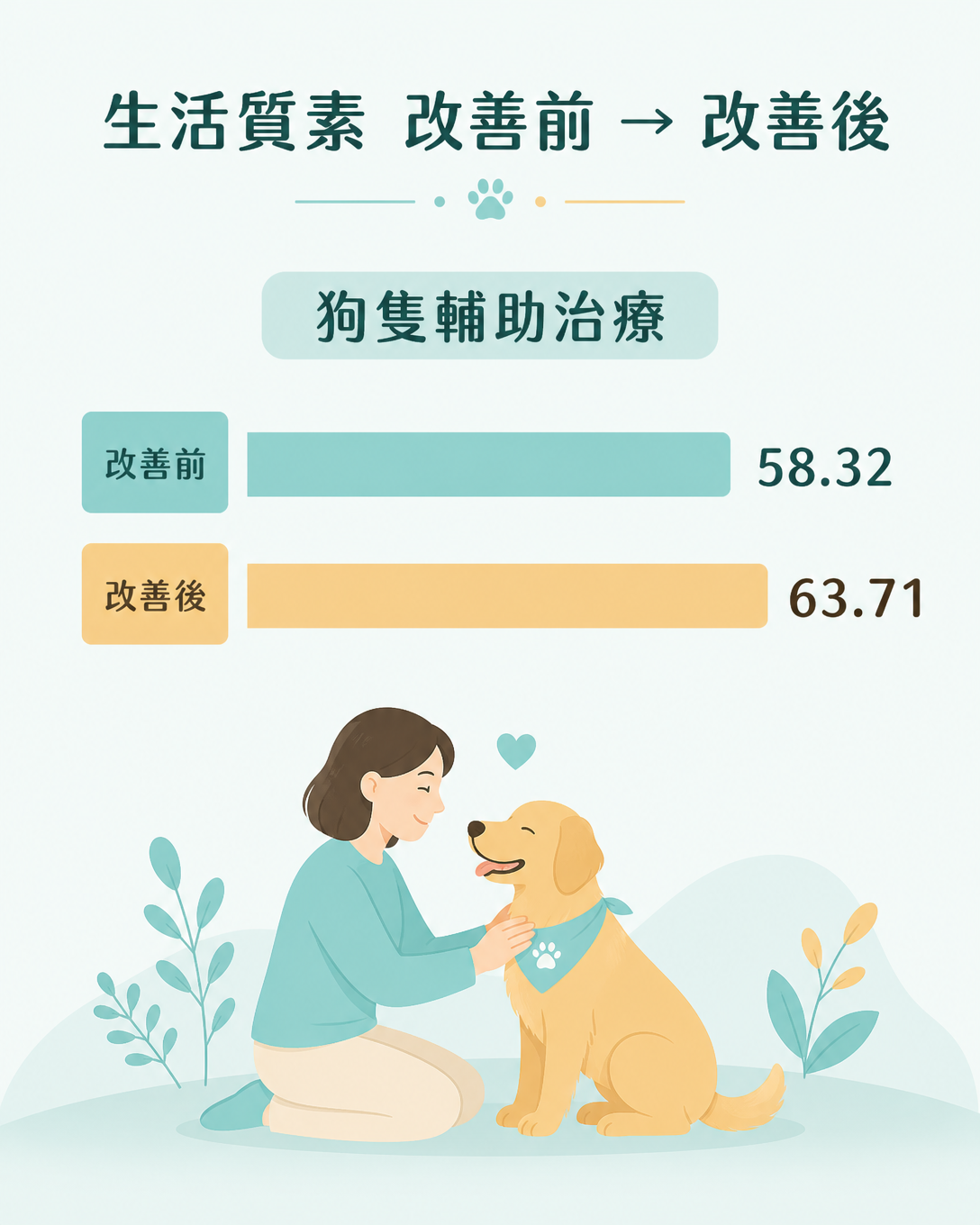
Randomised trials of autism interventions in Hong Kong are few, but they are not absent. A 2026 exploratory study gave 64 children aged six to fifteen eight sessions of dog-assisted therapy. Parent-reported quality of life rose from 58.32 to 63.71 points, and psychosocial difficulties (SDQ total) fell from 15.63 to 13.16, both statistically significant3.
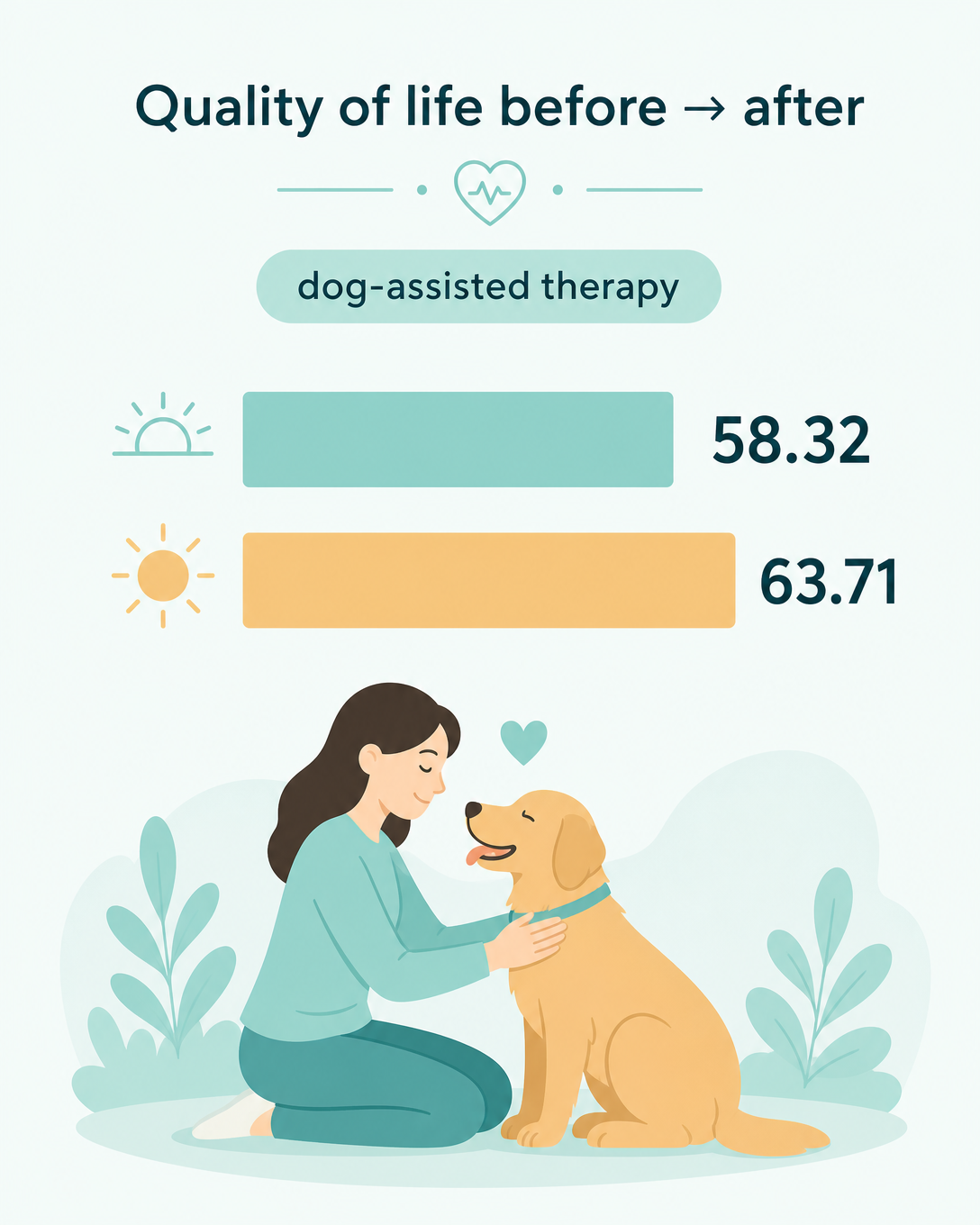
Quality of life rose from 58.32 to 63.71 points after dog-assisted therapy.
The study is small and exploratory, but it shows two things: Hong Kong can run its own autism research, and beyond mainstream behavioural and speech therapy, some adjuncts may bring real gains to a child's quality of life3. It deserves an open but not blind mind.
4. Brain stimulation: a large study with a Hong Kong connection
The most substantial trial of transcranial pulsed current stimulation, a randomised controlled trial of 312 children, actually involved Hong Kong researchers (affiliated with HKUST)4,5.
Its results: clinically meaningful social improvement in 54.2% of the treatment group versus 30.6% control; behaviour 40.6% versus 19.7%; sleep also improved; no serious adverse events4.
For Hong Kong parents this carries two meanings. First, this international study has local academic involvement, so the topic is not distant. Second, and honestly, the trial ran at eight centres in mainland China, so its applicability to Hong Kong children is a reasonable assumption, not yet directly proven4.
5. The device's registration status in Hong Kong
The relevant device families encounter (AscenZ-IV) is stated by its manufacturer to be registered in Hong Kong under the Medical Device Administrative Control System (HKMDCS), and approved by Singapore's Health Sciences Authority with a use covering improving social functioning and sleep in autism6.
This information comes from the manufacturer. The responsible approach is to verify the device's current listing with the Department of Health and consult a doctor before purchase or use. No brain-stimulation method has US FDA approval for autism, and Hong Kong registration is not an official endorsement of treatment efficacy6,7.
6. Set your expectations in the right place
In summary, the evidence Hong Kong parents can rely on comes in three layers:
- The sturdiest layer: behavioural, speech, and occupational therapy, the backbone of autism care and the "standard care" against which new methods are tested4.
- A new layer with international support: transcranial pulsed current stimulation, backed by one large randomised trial, usable at home, but positioned as an adjunct, not a replacement4.
- A still-thin layer of local evidence: direct Hong Kong studies of dog-assisted therapy and brain stimulation are few; most efficacy data come from the mainland, the US, or Europe3,4.
The most rational choice is to treat adjuncts as a step added cautiously on top of backbone therapy, with a doctor's oversight, not as an all-or-nothing replacement.
7. Honest limits
- The 2.57% prevalence figure comes from a single school-based study; community and clinical ascertainment differ1.
- The dog-assisted therapy study is small, single-site, with unblinded parent-reported outcomes3.
- The pivotal brain-stimulation trial ran in mainland China with device-maker involvement, and local replication is not yet published4.
- Adjunct and emerging treatments cannot replace evidence-based behavioural, occupational, and speech therapy4.
There is no single answer to a child's treatment path, but there is a clear priority order: build the backbone first, then add suitable adjuncts cautiously, on evidence, with a doctor's gatekeeping.

Every moment of connection is the truest return on this journey.
References
- Autism epidemiology in Hong Kong children and youths aged 6-17: Implications on autism screening and sex differences in the community. Autism. 2025. PMID: 40717427. https://pubmed.ncbi.nlm.nih.gov/40717427/
- ShallWeTalk — Hong Kong government mental-health information portal, Autism Spectrum Disorder page. https://www.shallwetalk.hk/en/mental-health-information/autism-spectrum-disorder/
- Dog-assisted therapy on Hong Kong children with autism spectrum disorder: an exploratory randomized controlled trial. European Journal of Pediatrics. 2026. PMID: 41511681. https://pubmed.ncbi.nlm.nih.gov/41511681/
- Liu Z, Zhong S, Ho RCM, et al. Transcranial Pulsed Current Stimulation and Social Functioning in Children With Autism: A Randomized Clinical Trial. JAMA Network Open. 2025;8(4):e255776. PMID: 40257798. https://pubmed.ncbi.nlm.nih.gov/40257798/
- Hong Kong University of Science and Technology (HKUST) research portal — publication listing for the JAMA tPCS trial. https://researchportal.hkust.edu.hk/en/publications/transcranial-pulsed-current-stimulation-and-social-functioning-in/
- AscenZion Neuromodulation — manufacturer materials and press release on the JAMA publication. https://ascenzion.com.sg/press-release-significant-paper-published-in-jama-on-the-effect-of-transcranial-pulsed-current-stimulation-on-social-functioning-in-children-with-autism/
- Hsu CW, et al. A network meta-analysis of non-invasive brain stimulation interventions for autism spectrum disorder. Neuroscience & Biobehavioral Reviews. 2024. PMID: 38981573. https://pubmed.ncbi.nlm.nih.gov/38981573/