Two in the morning, and the child is still awake in bed, or wakes crying through the night. This is not one family's story but an extremely common daily reality for autism families. This article aims to make three things clear: how common the problem is, why it is more than "just not sleeping enough," and which treatment options actually have evidence behind them.
1. The scale of the problem: far more common than you think
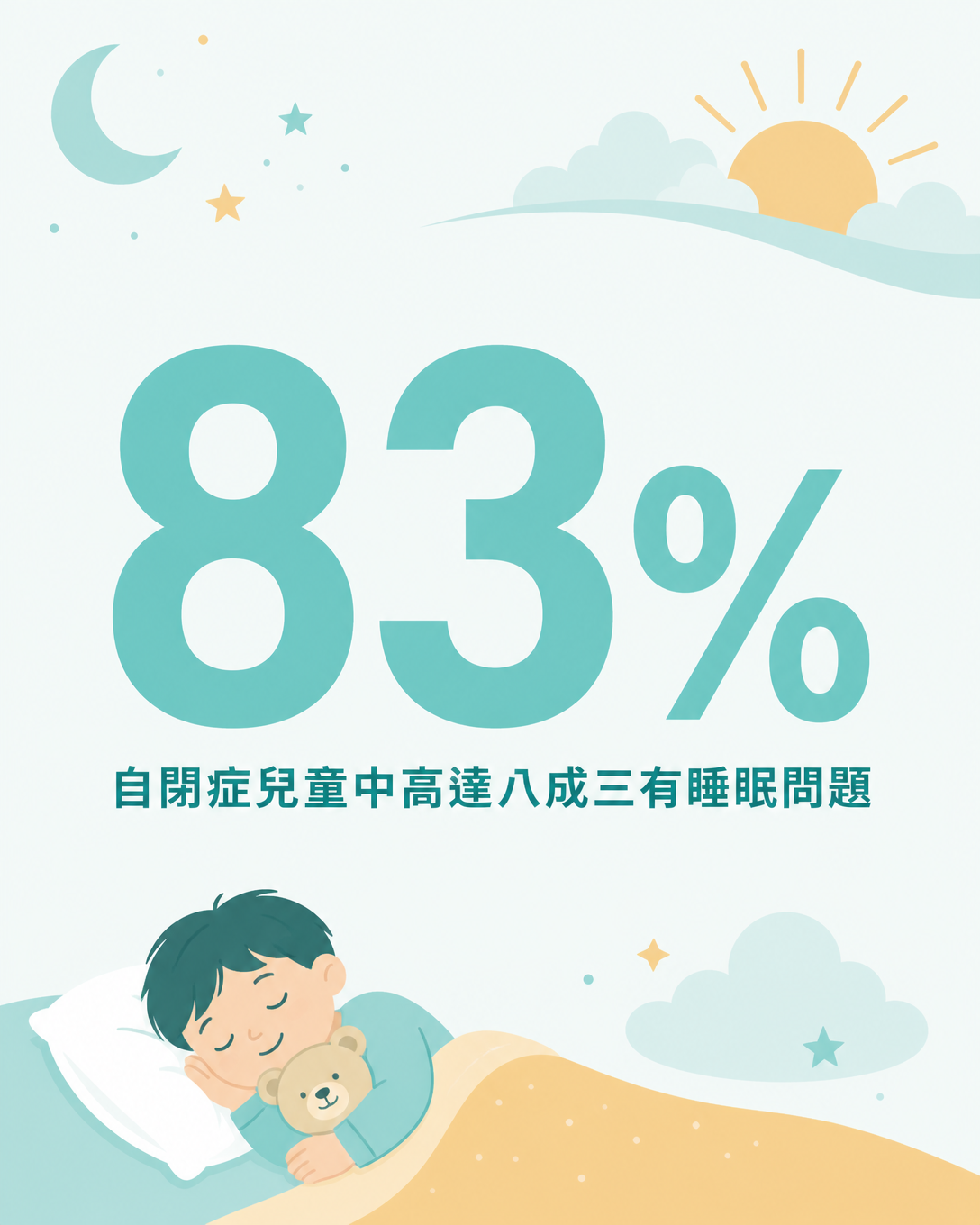
A 2025 systematic review (26 studies) reports sleep disturbances affect up to 83% of children and adolescents with autism1. A 2023 large meta-analysis spanning 340 publications and nearly 590,000 participants lists sleep-wake problems among the most frequent co-occurring conditions in autism2.
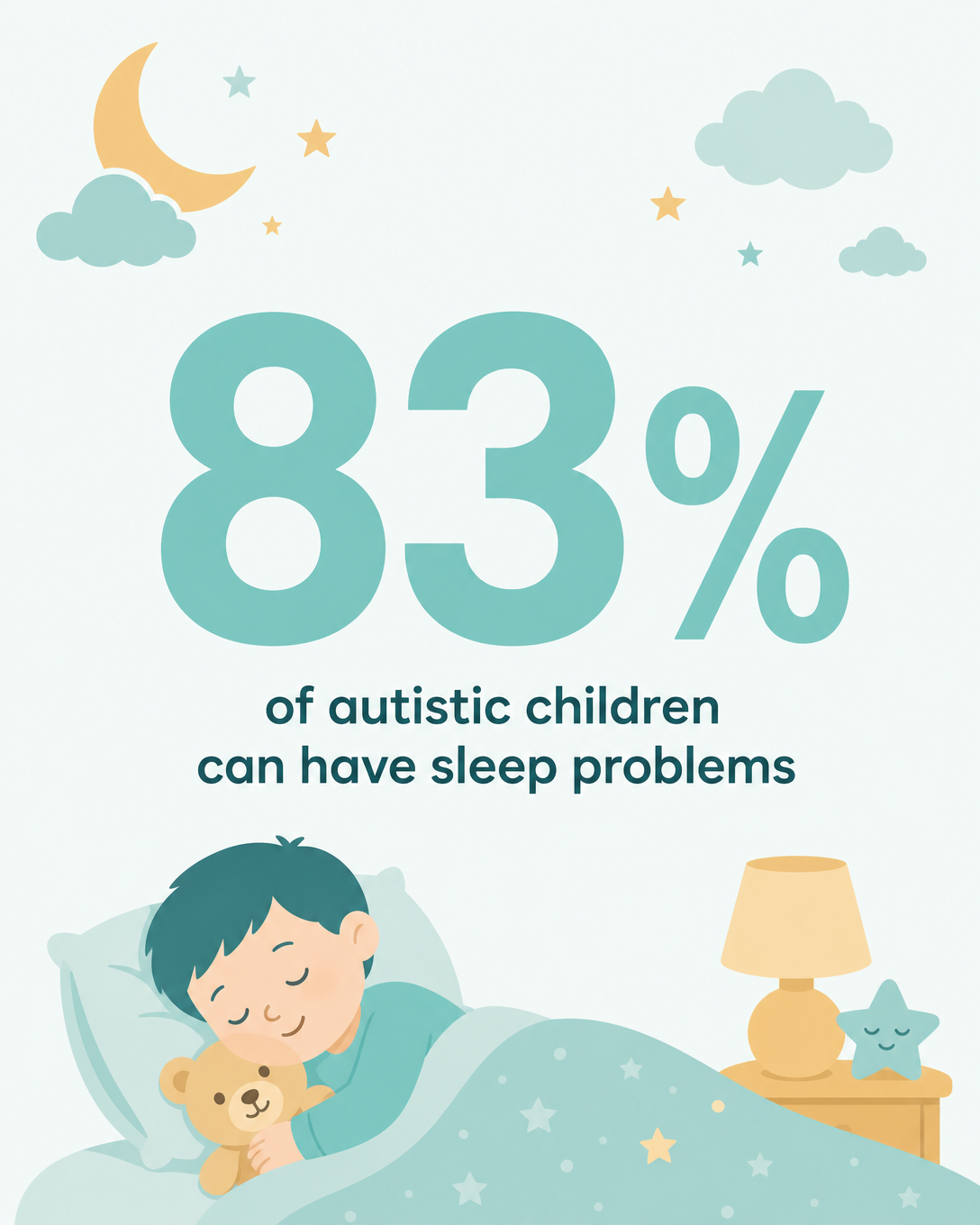
Up to 83% of autistic children and adolescents can have sleep problems.
If you are the parent awake every night, remember one thing first: you are not doing a bad job. You are facing a challenge that is documented, common, and real.
2. Why it deserves your priority
A 2024 meta-analysis directly examined the link between sleep problems and core autism symptoms, concluding that sleep problems are significantly correlated with both core symptoms and behavioural problems3. In other words, sleeping poorly is not just "being tired at night"; it materially worsens a child's repetitive behaviour, emotional swings, and social difficulty during the day.
It is a two-way road: autism makes it harder to fall asleep, and poor sleep makes autism's symptoms more visible. Breaking that cycle often lightens daytime therapy and family life together.
3. Melatonin: the most studied, but not the same for every child
Melatonin is the most-studied medication option, yet the evidence is highly heterogeneous, meaning effects differ widely between children.
- A 2011 meta-analysis (5 double-blind randomised trials) found melatonin improves sleep duration, sleep onset, and night waking4.
- A 2023 meta-analysis (15 studies) quantified: total sleep time (effect 0.78), sleep latency (1.23), and sleep efficiency (−0.70) all improved significantly, but night waking did not; notably, heterogeneity was very high (about 91–94%), so estimates should be read cautiously5.
- Another 2023 meta-analysis (4 randomised trials, 238 children) found melatonin significantly shortens sleep onset, reduces night waking, and lengthens total sleep time6.
The lesson for parents: melatonin helps many children, but not all. It needs a prescription and individual dose and formulation adjustment; it is not a one-pill answer to everything5.
4. Non-drug options: behavioural and brain adjunct
Behavioural intervention is the first line every guideline recommends. Consistent bedtime routines, sleep-environment adjustments, and parental guidance improve sleep with no drug side effects. The catch is access, with digital and telehealth delivery being studied to widen reach7.
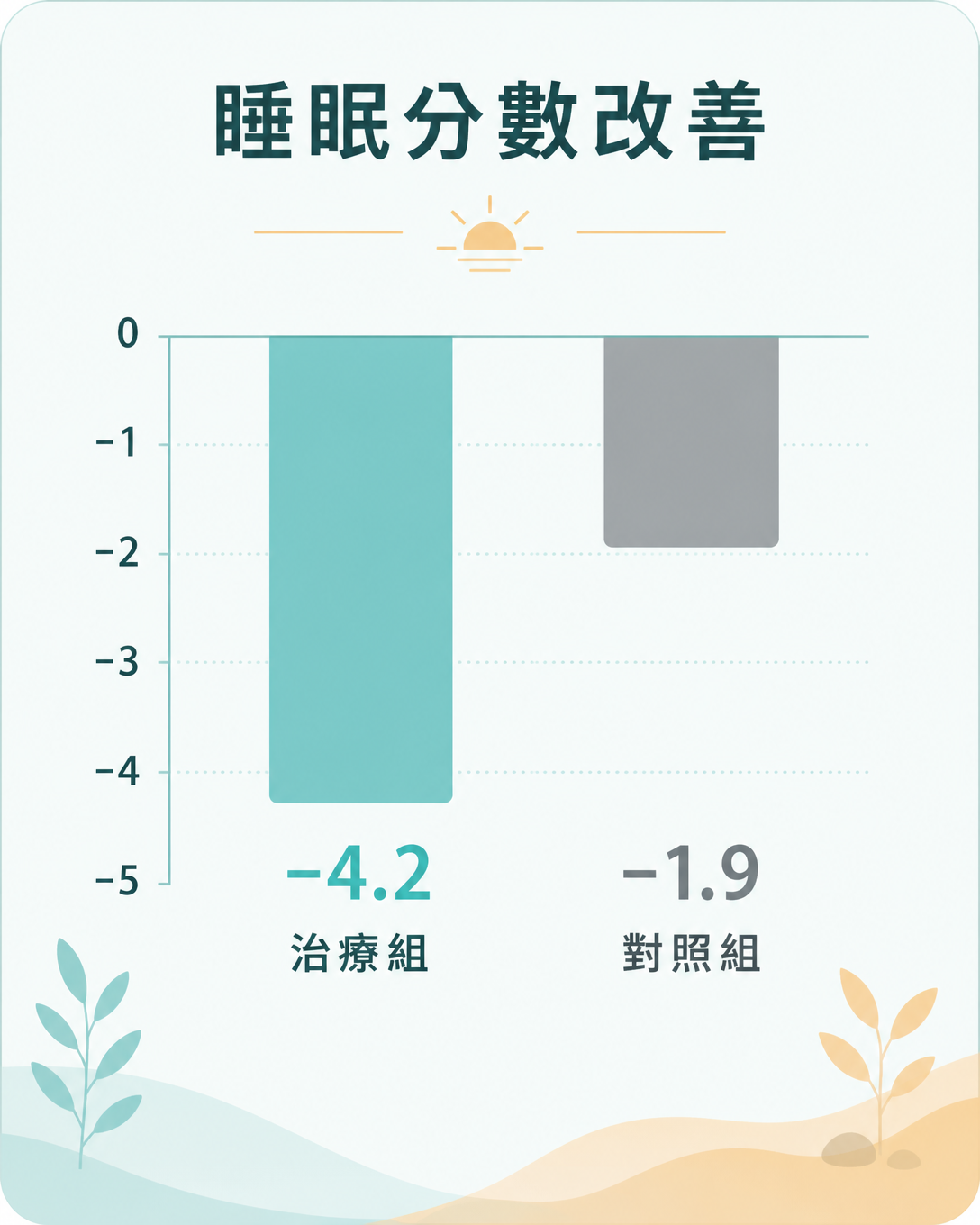
The brain adjunct (tPCS) is another emerging direction. In the 312-child trial, children receiving real stimulation improved their sleep questionnaire score by 4.2 points (versus 1.9 control), driven by reduced daytime sleepiness8. The benefit to a family is a more alert child by day, which lifts learning, therapy, and interaction. But honestly, the effect concentrated in daytime sleepiness, and it was a secondary outcome of that study8.
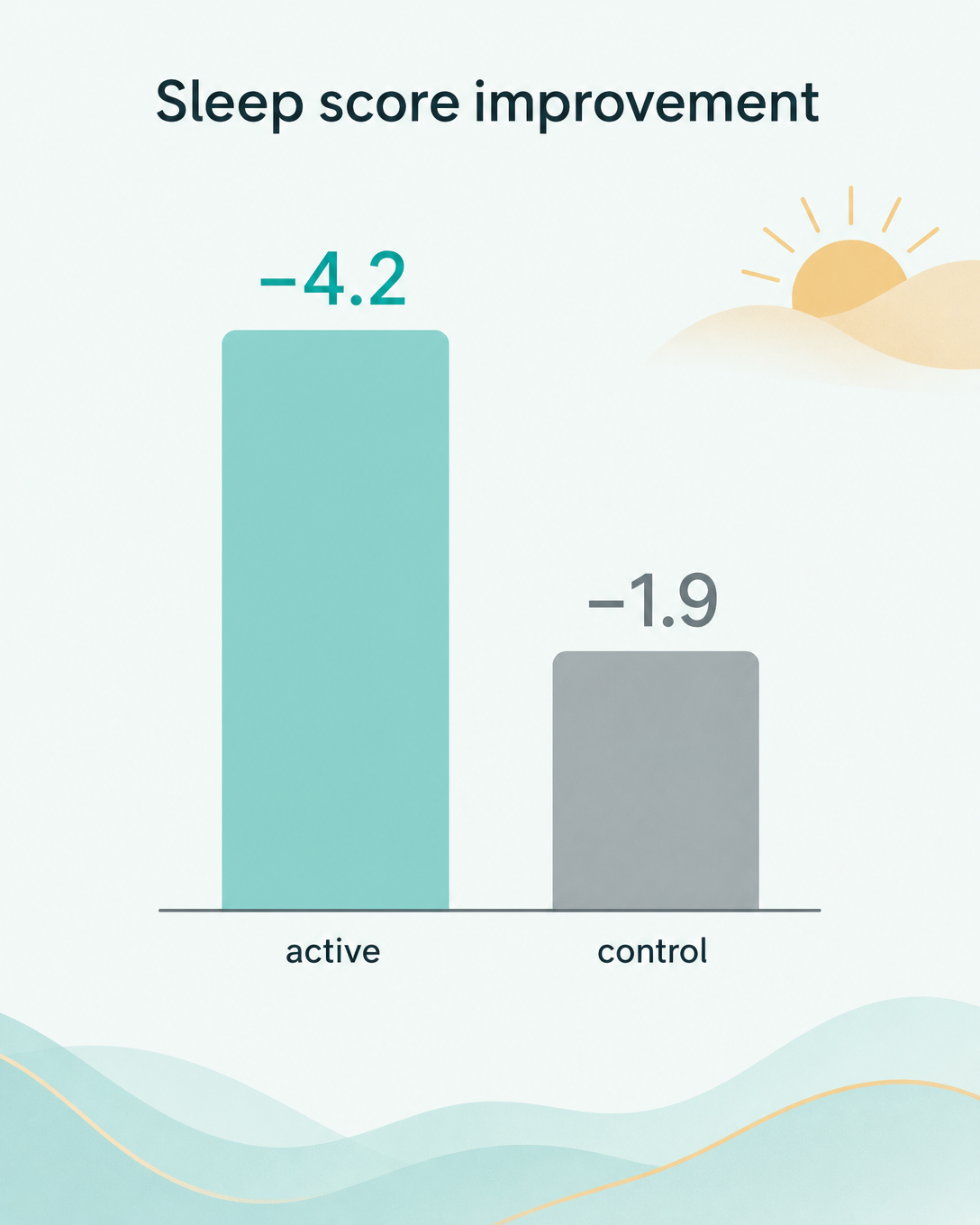
Sleep score improved 4.2 points in the active group versus 1.9 in control, driven by daytime sleepiness.
5. Magnetic stimulation (rTMS): preliminary evidence
One more path is accumulating evidence: repetitive transcranial magnetic stimulation. A 2025 randomised trial (20 children aged six to twelve) found greater improvement in the sleep questionnaire total (p = .008) and several subdomains, with mild, transient side effects9. An earlier chart review (28 children aged three to nine) also reported sleep as the most improved comorbidity10.
Still, these studies are small and partly waitlist-controlled (not sham), so the evidence is preliminary. Magnetic equipment is clinic-only, limiting convenience for most families9,10.
6. A clear table of options
| Option | Evidence tier | Main effect | To watch | |---|---|---|---| | Behavioural (sleep habits, parent training) | First line per guidelines | Improves sleep, no drug side effects | Limited access7 | | Melatonin | Multiple meta-analyses | Shortens onset, lengthens sleep | High heterogeneity, prescription, drowsiness4,5,6 | | tPCS (pulsed current, home) | One large RCT (n=312) | Significant sleep-questionnaire gain, daytime sleepiness | Secondary outcome, single study, industry ties8 | | rTMS (magnetic, clinic) | Small trial + chart review | Sleep questionnaire and multiple domains improved | Small samples, clinic-bound, no approved use9,10 |
7. Land in a sober place
- Prevalence figures vary by definition and sample (up to 83%); use ranges, not one precise number1,2.
- Melatonin meta-analyses are highly heterogeneous; discount the estimates5.
- The tPCS sleep finding is a secondary outcome of one trial, concentrated in daytime sleepiness8.
- rTMS evidence remains preliminary9.
- A child's sleep problem can reflect sleep apnoea, epilepsy, sensory, or mental-health causes; get a doctor's assessment first1,3.
A child's sleep is never a small thing, nor an unsolvable one. Hand the problem to the right people and follow the evidence step by step; many families have found their nights again.
Every peaceful night is its own reward.
References
- Sleep Disturbances and Behavioral Problems in Children and Adolescents with Autism Spectrum Disorder — A Systematic Review. Clinics and Practice. 2025;15(11):201. PMID: 41294632. https://pubmed.ncbi.nlm.nih.gov/41294632/
- Micai M, et al. Prevalence of co-occurring conditions in children and adults with autism spectrum disorder: A systematic review and meta-analysis. Neuroscience & Biobehavioral Reviews. 2023;155:105436. PMID: 37913872. https://pubmed.ncbi.nlm.nih.gov/37913872/
- Kim H, et al. Correlations between sleep problems, core symptoms, and behavioral problems in children and adolescents with autism spectrum disorder: a systematic review and meta-analysis. European Child & Adolescent Psychiatry. 2024;33(5):1539-1549. PMID: 37477722. https://pubmed.ncbi.nlm.nih.gov/37477722/
- Rossignol DA, Frye RE. Melatonin in autism spectrum disorders: a systematic review and meta-analysis. Developmental Medicine & Child Neurology. 2011;53(9):783-792. PMID: 21518346. https://pubmed.ncbi.nlm.nih.gov/21518346/
- Pereira-Santos M, et al. Melatonin for sleep disorders in people with autism: Systematic review and meta-analysis. Progress in Neuro-Psychopharmacology and Biological Psychiatry. 2023;123:110695. PMID: 36584862. https://pubmed.ncbi.nlm.nih.gov/36584862/
- Efficacy of Melatonin for Insomnia in Children with Autism Spectrum Disorder: A Meta-analysis. Frontiers in Pediatrics. 2023. PMID: 36827993. https://pubmed.ncbi.nlm.nih.gov/36827993/
- Duan Z, et al. Digital and telehealth behavioral sleep interventions for improving sleep outcomes in children and adolescents with autism spectrum disorder: a systematic review and meta-analysis. Sleep Medicine. 2025;136:106870. PMID: 41110404. https://pubmed.ncbi.nlm.nih.gov/41110404/
- Liu Z, Zhong S, Ho RCM, et al. Transcranial Pulsed Current Stimulation and Social Functioning in Children With Autism: A Randomized Clinical Trial. JAMA Network Open. 2025;8(4):e255776. PMID: 40257798. https://pubmed.ncbi.nlm.nih.gov/40257798/
- Ezedinma U, et al. Evaluating the effect of repetitive transcranial magnetic stimulation on sleep difficulties in children with autism spectrum disorder: a randomized controlled trial. SLEEP Advances. 2025;6(4):zpaf088. PMID: 41445722. https://pubmed.ncbi.nlm.nih.gov/41445722/
- Ezedinma U, et al. Outcomes from Individual Alpha Frequency Guided Repetitive Transcranial Magnetic Stimulation in Children with Autism Spectrum Disorder — A Retrospective Chart Review. Child Psychiatry & Human Development. 2024;55(4):1010-1019. PMID: 36367616. https://pubmed.ncbi.nlm.nih.gov/36367616/