If your child struggles to fall asleep or wakes repeatedly through the night, you know this already: a child's sleep problem is never just the child's. It drains the whole family's rest, mood, and the energy each person brings to the next day. The good news is that this is a well-researched area with a clear order of what to do. This article moves from "why treat it" to "how to treat it."
1. Why sleep deserves your serious attention
A 2022 meta-analysis pooling 49 articles and 15,074 participants reached a clear conclusion: sleep problems in autistic children are significantly associated with more severe clinical symptoms and worse daytime functioning, most strongly linked to internalising/externalising behaviour and executive function1.
In a parent's words: the worse a child sleeps, the more likely daytime meltdowns, the harder focus, and the less cooperation. Sleep is not an "extra" problem; it is a magnifier that amplifies every other difficulty. Treating sleep often lets daytime behaviour, therapy, and the whole family's life breathe easier.
2. Step one: behavioural intervention, cheap, low-risk, and effective
The step most worth not skipping is behavioural and sleep-hygiene intervention. A randomised trial called "Sleeping Sound" enrolled 245 autistic children aged five to thirteen, delivered just two fifty-minute sessions plus phone follow-up, and found significantly improved parent-reported child sleep problems at three months (effect size −0.7)2.
This means consistent bedtime routines, adjusting the sleep environment, and gentle handling of night-waking, all "free" practices, have real evidence behind them. They carry no drug side effects and the lowest risk, so they are the natural first step2.
3. Step two: melatonin, the best-evidenced medication option
When behavioural intervention is not enough, melatonin is the most studied option. A meta-analysis of 4 randomised trials (238 children) found melatonin significantly shortens time to fall asleep, reduces night waking, and lengthens total sleep time3.
The most substantial is a pivotal trial of 125 children (aged 2 to 17 and a half) on prolonged-release melatonin for thirteen weeks:
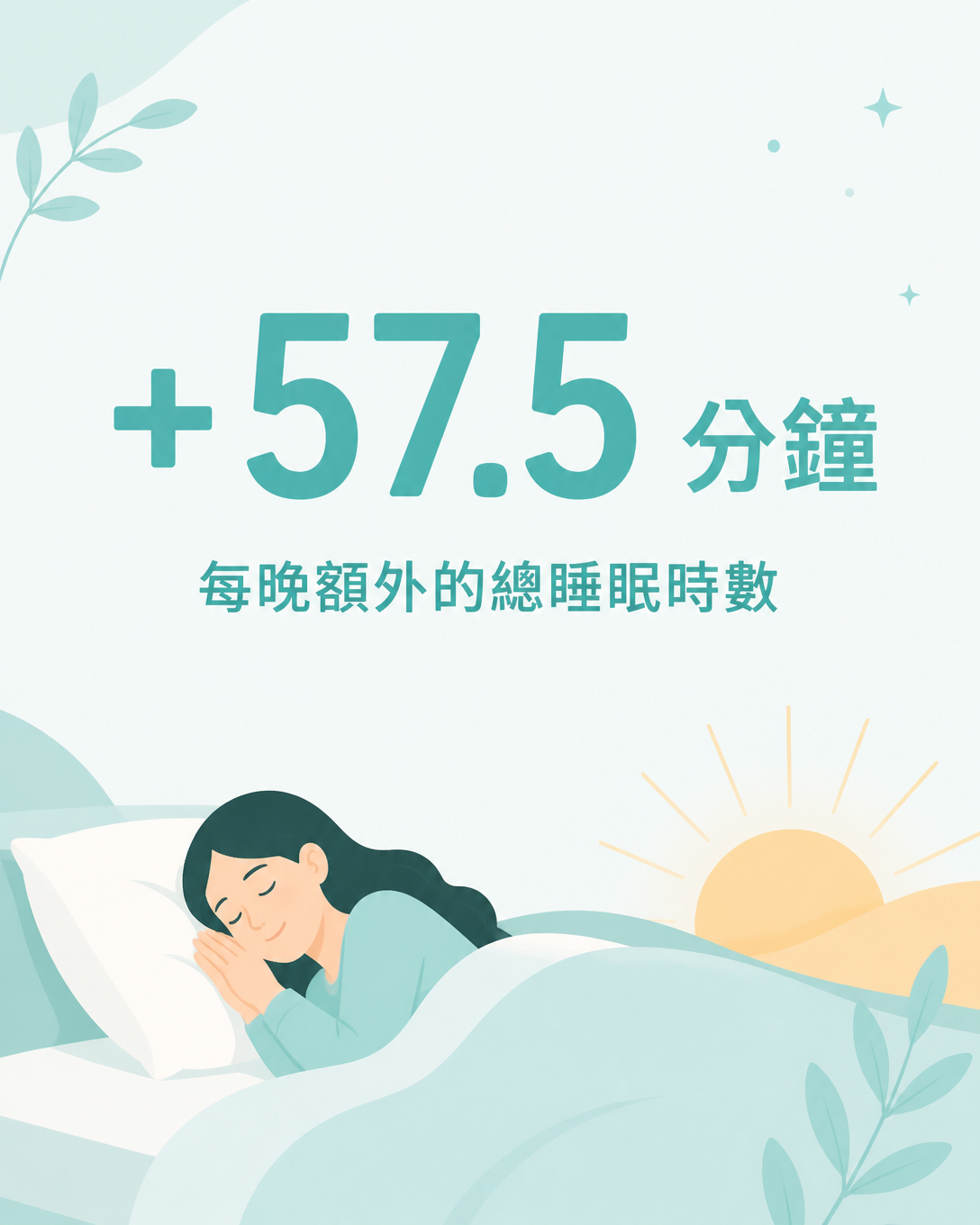
- Total sleep time rose by an average of 57.5 minutes, versus 9.1 minutes for placebo4.
- Time to fall asleep fell by 39.6 minutes, versus 12.5 minutes4.
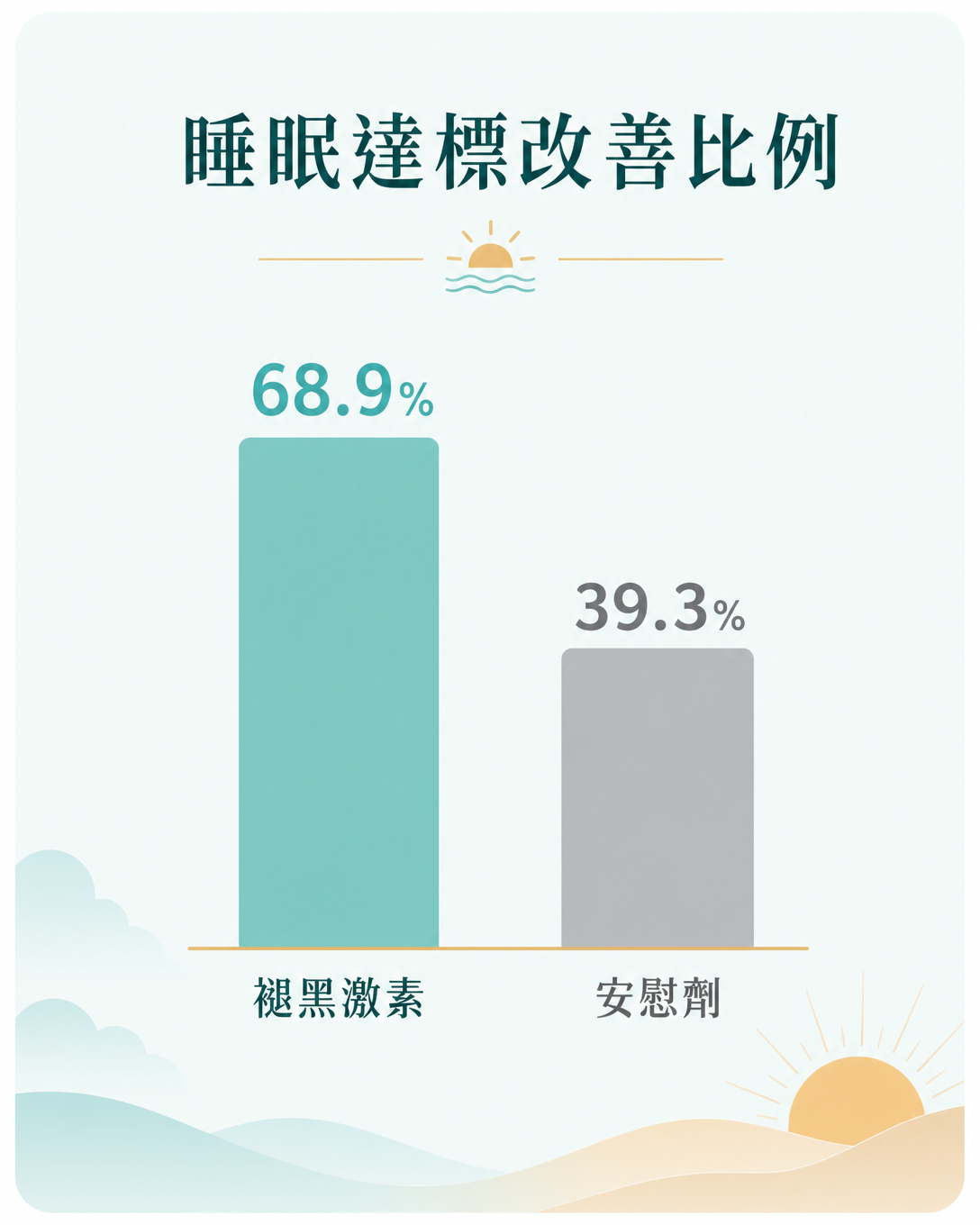
- 68.9% versus 39.3% reached clinically meaningful improvement, about one extra responder for every 3.4 children treated4.
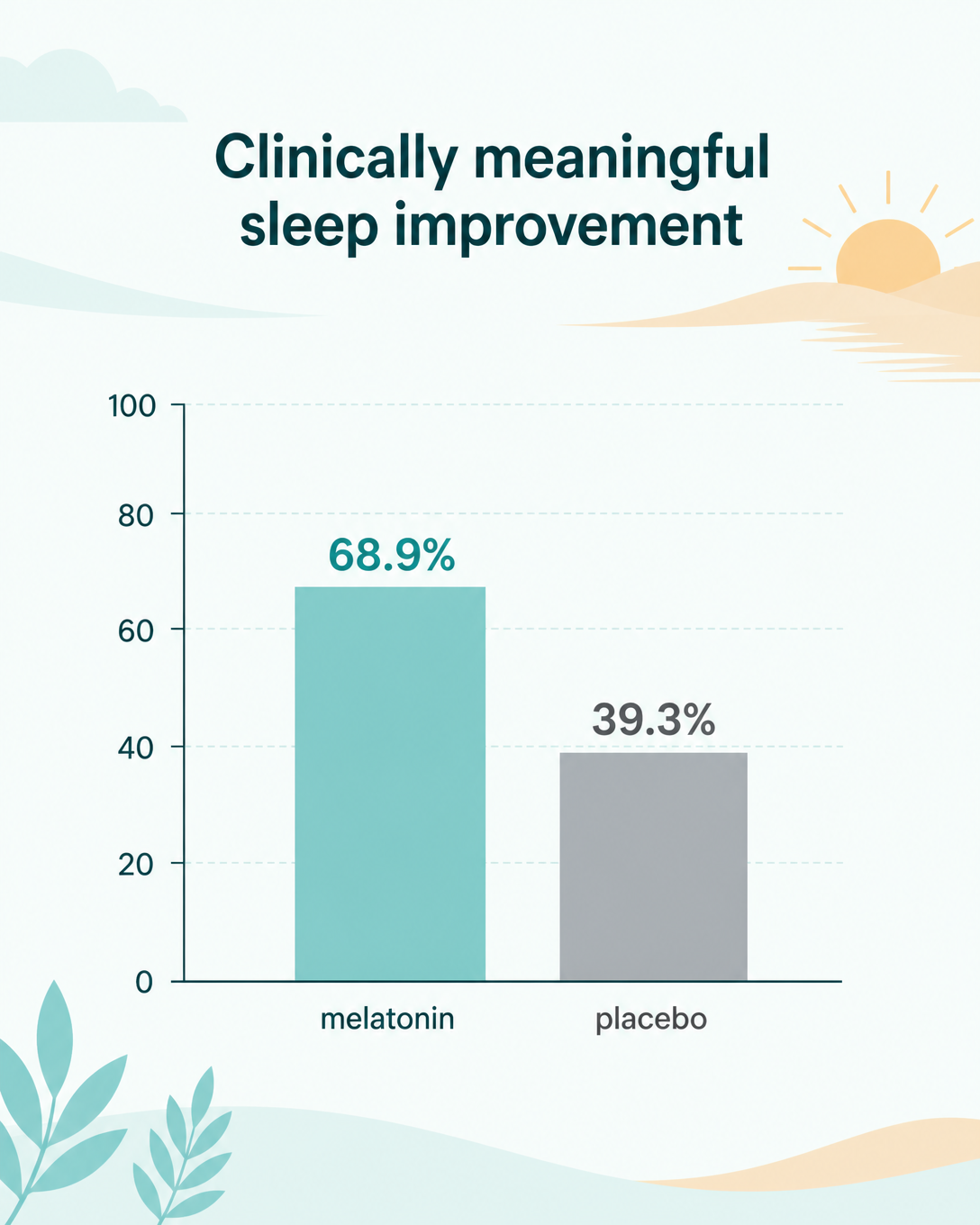
68.9% of children on melatonin versus 39.3% on placebo reached clinically meaningful sleep improvement.
For a parent, nearly an hour more sleep a night and falling asleep nearly forty minutes faster means a better daytime state for the child and, at last, a genuinely free evening of your own. This is not a small gain.
4. Is melatonin safe? Long-term data are limited, but reassuring
Melatonin's most common side effect is drowsiness4. On long-term safety, a study that followed the same children for two years examined sleep, growth, and puberty outcomes, addressing parents' biggest long-term worry5. A 2025 meta-analysis further analysed how dose, formulation, course, and age modify the effect, offering finer prescribing guidance6.
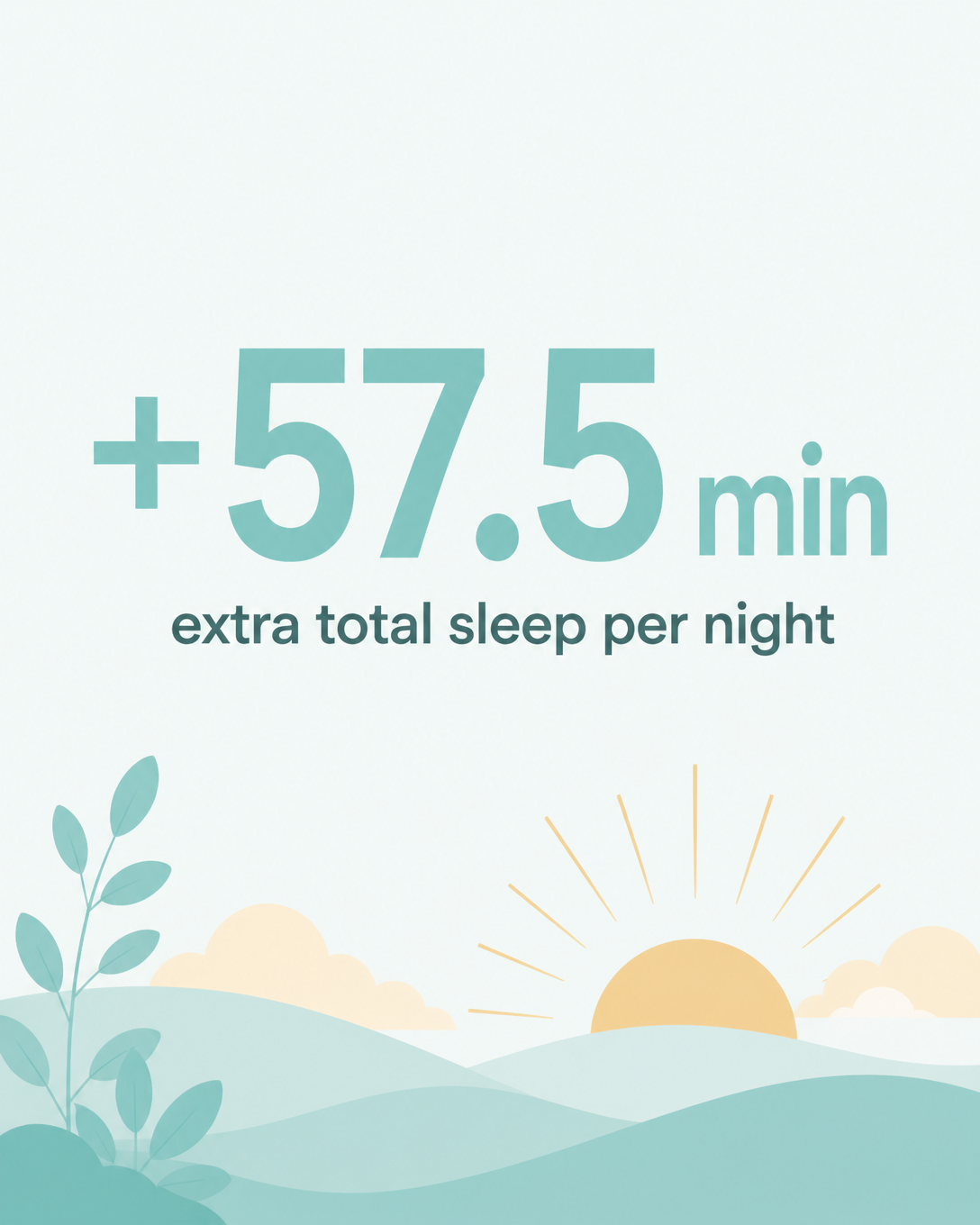
An extra 57.5 minutes of total sleep per night on prolonged-release melatonin.
The conclusion: short-term evidence is solid and positive; long-term data come mainly from one follow-up cohort. Whether to medicate and at what dose should be decided by a doctor, not self-purchased.
5. Step three: an emerging brain adjunct, the tPCS sleep finding
For families wanting a non-drug option, transcranial pulsed current stimulation offers a direction. In the 312-child trial, children receiving real stimulation improved their sleep questionnaire score by 4.2 points versus 1.9 in the control group, a significant difference driven mainly by reduced daytime sleepiness7.
In plain terms, the child is less drowsy during the day, so daytime learning and interaction improve. But to be honest, the gain concentrated in "daytime sleepiness," and other sleep domains (such as night waking and sleep onset) were not individually significant, so it should not be treated as a cure for insomnia7.
6. A clear order of what to do
Rank the evidence and the order is clear:
- Behaviour and sleep habits (low-risk, effective), do first2.
- Melatonin (well-evidenced, prescription), add when behaviour is not enough3,4.
- Brain adjunct tPCS (emerging, large-trial support, effect concentrated in daytime sleepiness), an extra option to discuss with a doctor7.
7. Finally, limits to keep in mind
- The tPCS sleep finding is a secondary outcome of that large study and concentrated in daytime sleepiness; do not over-read it7.
- Melatonin works well but drowsiness is its most common side effect, and long-term data are limited4,5.
- Behavioural intervention is clearly effective on parent-reported sleep problems, but other daytime measures were not significant after multiple-comparison correction2.
- A child's sleep problem can reflect sleep apnoea, epilepsy, sensory, or mental-health causes; rule those out with a doctor before choosing a method1,2.
Sleep is one of the few things on this road where effort reliably pays off. Get the order right, go step by step, and both your child's nights and your own get a little easier.
Every peaceful night is its own reward.
References
- Han GT, et al. Associations between sleep problems and domains relevant to daytime functioning and clinical symptomatology in autism: A meta-analysis. Autism Research. 2022. PMID: 35635067. https://pubmed.ncbi.nlm.nih.gov/35635067/
- Papadopoulos N, Sciberras E, Hiscock H, et al. Sleeping Sound Autism Spectrum Disorder (ASD): a randomised controlled trial of a brief behavioural sleep intervention in primary school-aged autistic children. Journal of Child Psychology and Psychiatry. 2022;63(11):1423-1433. PMID: 35285017. https://pubmed.ncbi.nlm.nih.gov/35285017/
- Xiong M, Li F, Liu Z, et al. Efficacy of Melatonin for Insomnia in Children with Autism Spectrum Disorder: A Meta-analysis. Neuropediatrics. 2023;54(3):167-173. PMID: 36827993. https://pubmed.ncbi.nlm.nih.gov/36827993/
- Gringras P, Nir T, Breddy J, Frydman-Marom A, Findling RL. Efficacy and Safety of Pediatric Prolonged-Release Melatonin for Insomnia in Children With Autism Spectrum Disorder. Journal of the American Academy of Child & Adolescent Psychiatry. 2017;56(11):948-957.e4. PMID: 29096777. https://pubmed.ncbi.nlm.nih.gov/29096777/
- Malow BA, et al. Sleep, Growth, and Puberty After 2 Years of Prolonged-Release Melatonin in Children With Autism Spectrum Disorder. Journal of the American Academy of Child & Adolescent Psychiatry. 2021. PMID: 31982581. https://pubmed.ncbi.nlm.nih.gov/31982581/
- Yang H, Lu F, Zhao X. Factors influencing the effect of melatonin on sleep quality in children with autism spectrum disorder: a systematic review and meta-analysis. Sleep and Breathing. 2025;29(4):262. PMID: 40768003. https://pubmed.ncbi.nlm.nih.gov/40768003/
- Liu Z, Zhong S, Ho RCM, et al. Transcranial Pulsed Current Stimulation and Social Functioning in Children With Autism: A Randomized Clinical Trial. JAMA Network Open. 2025;8(4):e255776. PMID: 40257798. https://pubmed.ncbi.nlm.nih.gov/40257798/